Hot Coffee Recipes for Cold Evenings, From Masala Coffee to Cinnamon Lattes
Hot coffee recipes for cold evenings all follow one method: brew a strong coffee base, infuse whole spices in heat rather than sprinkling powder on top, and finish with milk heated to 60 to 65 degrees. The five here are masala coffee, jaggery coffee, ginger coffee, cardamom coffee and a cinnamon latte. Each takes under ten minutes and needs nothing more than a saucepan and a strainer.
They share the same base, so that is worth getting right first.
Start with the base
Every recipe here is the same two components with something different infused into them. Get these right and the rest is seasoning.
The coffee. You need it stronger than you would normally drink, because milk and spice both flatten it. A South Indian filter decoction, a moka pot brew or a double shot of espresso all give you the concentration required. Regular filter coffee works if you brew it at roughly double strength.
The milk. Full fat gives the best texture and carries spice flavour better than toned milk. Heat it until steam rises but no bubbles form at the edges, somewhere around 60 to 65 degrees, which is also where milk tastes sweetest. A handheld milk frother takes ten seconds and turns any of these into something that looks like it came from a cafe.
The spices. Whole, lightly crushed, and infused in heat. Pre ground spice powder dumped into a finished cup tastes dusty and settles at the bottom. This single change is what separates these recipes from the versions people give up on.
Masala Coffee
The Indian spiced coffee, and the one worth learning first. Warming without being heavy, and endlessly adjustable once you know the base.
Ingredients, serves 2
- 2 tbsp coarsely ground dark roast coffee
- 250 ml full fat milk
- 150 ml water
- 2 green cardamom pods, lightly crushed
- 1 small piece cinnamon bark
- 2 cloves
- 1 thin slice fresh ginger
- 2 black peppercorns, lightly crushed
- Sugar or jaggery to taste
Method
- Dry roast the crushed spices in a small pan for 30 seconds, until the aroma lifts. Do not let them darken.
- Add the water and bring it to a simmer, then let the spices steep for 3 minutes off the heat.
- Return to low heat, add the coffee and simmer for 2 minutes without boiling hard.
- Pour in the milk and heat until just below boiling, stirring once.
- Strain into cups, sweeten, and pour between two vessels a few times to froth it.
The ratio to remember is more cardamom than anything else. Cloves and pepper dominate quickly, so two of each is the ceiling for two cups. If you make this often, crush a week's worth of the spice mix at once and store it in a sealed jar, though grinding the coffee fresh each time still matters more, and a coffee grinder with a coarse setting handles both.
Jaggery Coffee
Jaggery brings a mineral, molasses depth that white sugar cannot, and it suits dark roasted coffee particularly well.
Ingredients, serves 1
- 1 shot strong coffee or 60 ml decoction
- 150 ml milk
- 1.5 tsp grated jaggery
- A pinch of dried ginger powder, optional
Method
- Dissolve the jaggery into the hot coffee first, stirring until no grains remain.
- Heat the milk separately to just below boiling.
- Combine, stir, and serve immediately.
Order matters here more than in any other recipe on this list. Jaggery is mildly acidic and adding it directly to hot milk can split it, so it always goes into the coffee. A medium dark or dark roast from the dark roast beans range stands up to jaggery far better than a bright light roast, which gets muddled by it.
Ginger Coffee
The cold evening standby in most Indian kitchens, and the quickest of the five. Sharp, clean and a good deal less sweet than the others.
Ingredients, serves 1
- 1 shot strong coffee or 60 ml decoction
- 150 ml milk
- 2 thin slices fresh ginger, lightly bruised
- Sugar or honey to taste
Method
- Simmer the ginger in the milk on low heat for 4 to 5 minutes, so the flavour infuses properly.
- Strain out the ginger.
- Pour the hot ginger milk over the coffee, sweeten and stir.
Fresh ginger is not optional here. Dried powder gives you heat without the aromatic lift, and the difference is immediately obvious side by side. Keep the milk below boiling while it infuses, which is easier with a temperature control kettle if you are heating water for a decoction at the same time.
Cardamom Coffee
The simplest of the spiced recipes and the most elegant. Common across the Middle East and Kerala alike, usually taken without milk.
Ingredients, serves 2
- 2 tbsp coarsely ground coffee
- 3 green cardamom pods, crushed
- 300 ml water
- Sugar to taste, or none
Method
- Add the crushed cardamom to the ground coffee before brewing.
- Brew as you normally would, giving it a minute longer than usual to steep.
- Serve black in small cups, or add a splash of hot milk.
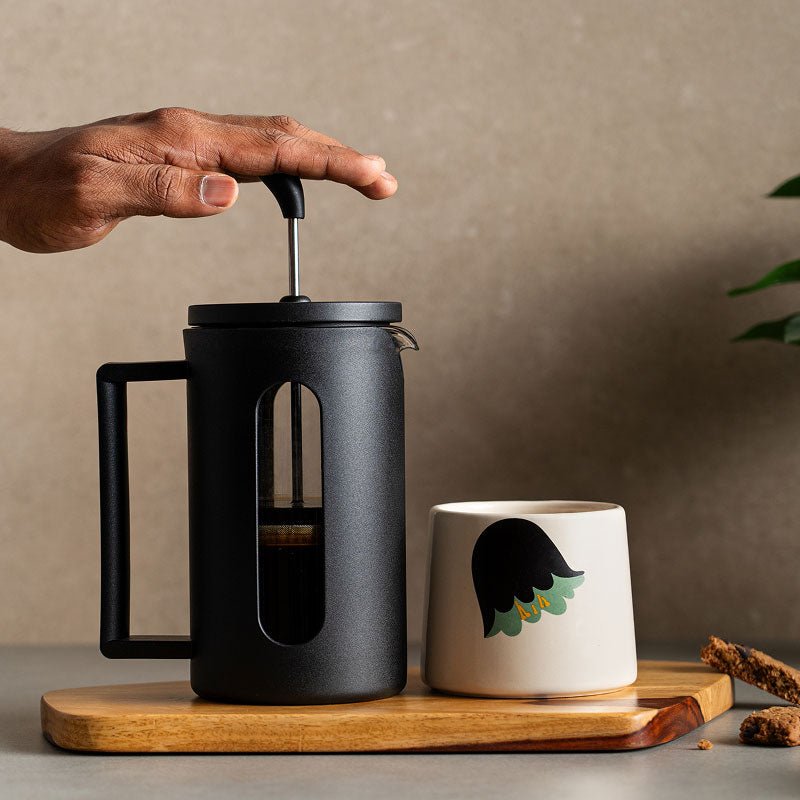
Adding the cardamom to the grounds rather than the water is what makes this work, because the oils release into the brew rather than floating on top. A French press suits this better than a paper filter, since the mesh lets the aromatic oils through instead of trapping them.
Cinnamon Latte
A cafe style drink without the syrup bottle. The trick is infusing the cinnamon into the coffee itself rather than stirring powder into a finished cup.
Ingredients, serves 1
- 1 double shot espresso or 60 ml strong coffee
- 180 ml milk
- 1 small piece cinnamon bark
- 1 tsp sugar or maple syrup
- A light dusting of cinnamon powder to finish
Method
- Drop the cinnamon bark into the hot coffee and leave it to steep for 3 minutes.
- Heat and texture the milk to 60 to 65 degrees, aiming for a glossy finish rather than stiff foam.
- Remove the bark, stir in the sweetener, and pour the milk in slowly.
- Dust with cinnamon powder.
Steeping bark gives you a rounded warmth that powder stirred in at the end never achieves, and it leaves no grit. For the pouring technique, the walkthrough on making a latte at home covers getting the milk and coffee to combine properly.
If you do not have a machine
None of these need an espresso machine. A moka pot, a South Indian filter or a French press all produce a base concentrated enough to carry milk and spice, and so does strong stovetop brewed coffee if you use more grounds than usual.
What does matter is getting the milk hot enough without boiling it, and aerating it even slightly. Pouring the finished drink back and forth between two vessels from a height works perfectly well, and the four methods for how to froth milk cover the alternatives if you want more foam. For more cold weather options beyond these five, there is a separate set of coffee recipes on the blog.