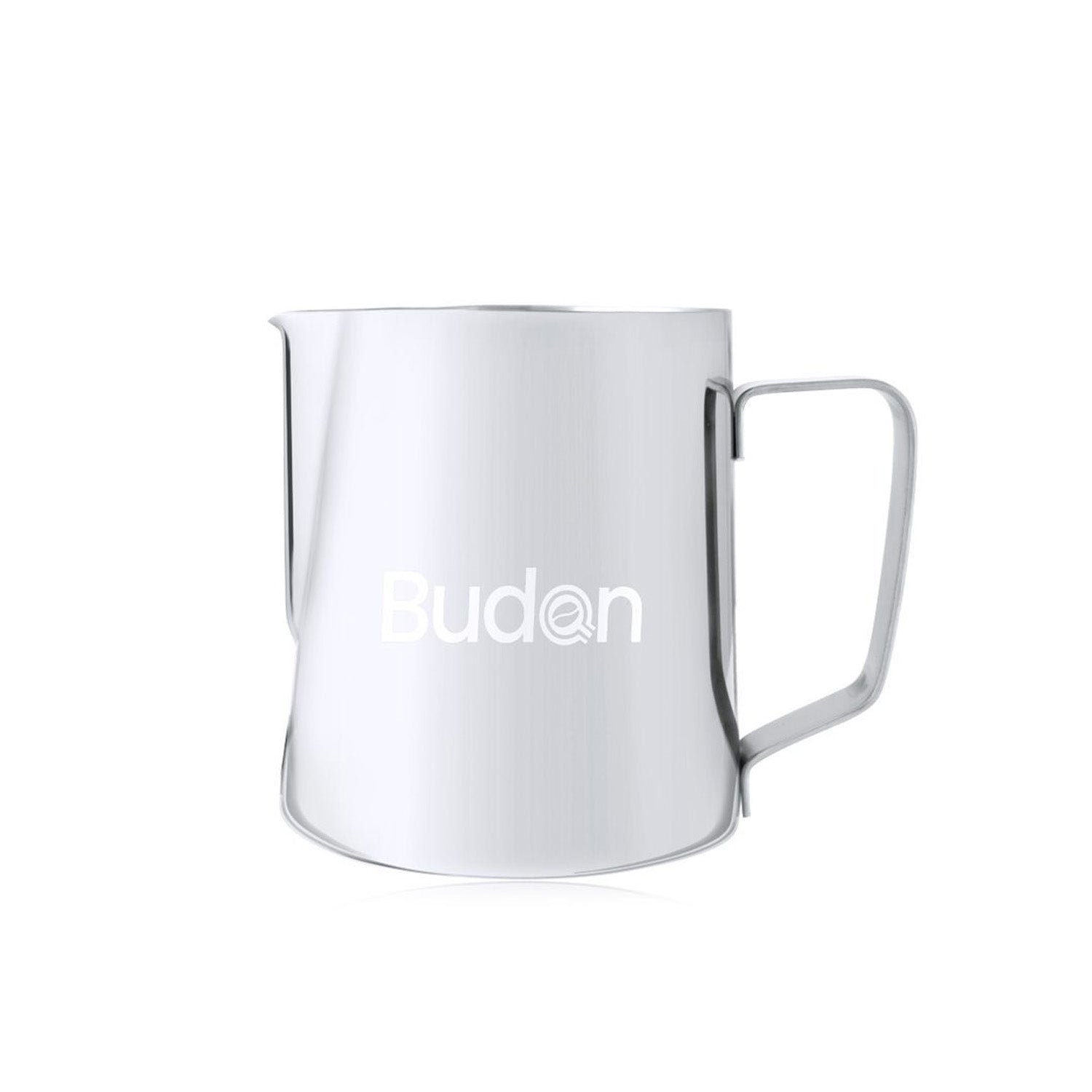
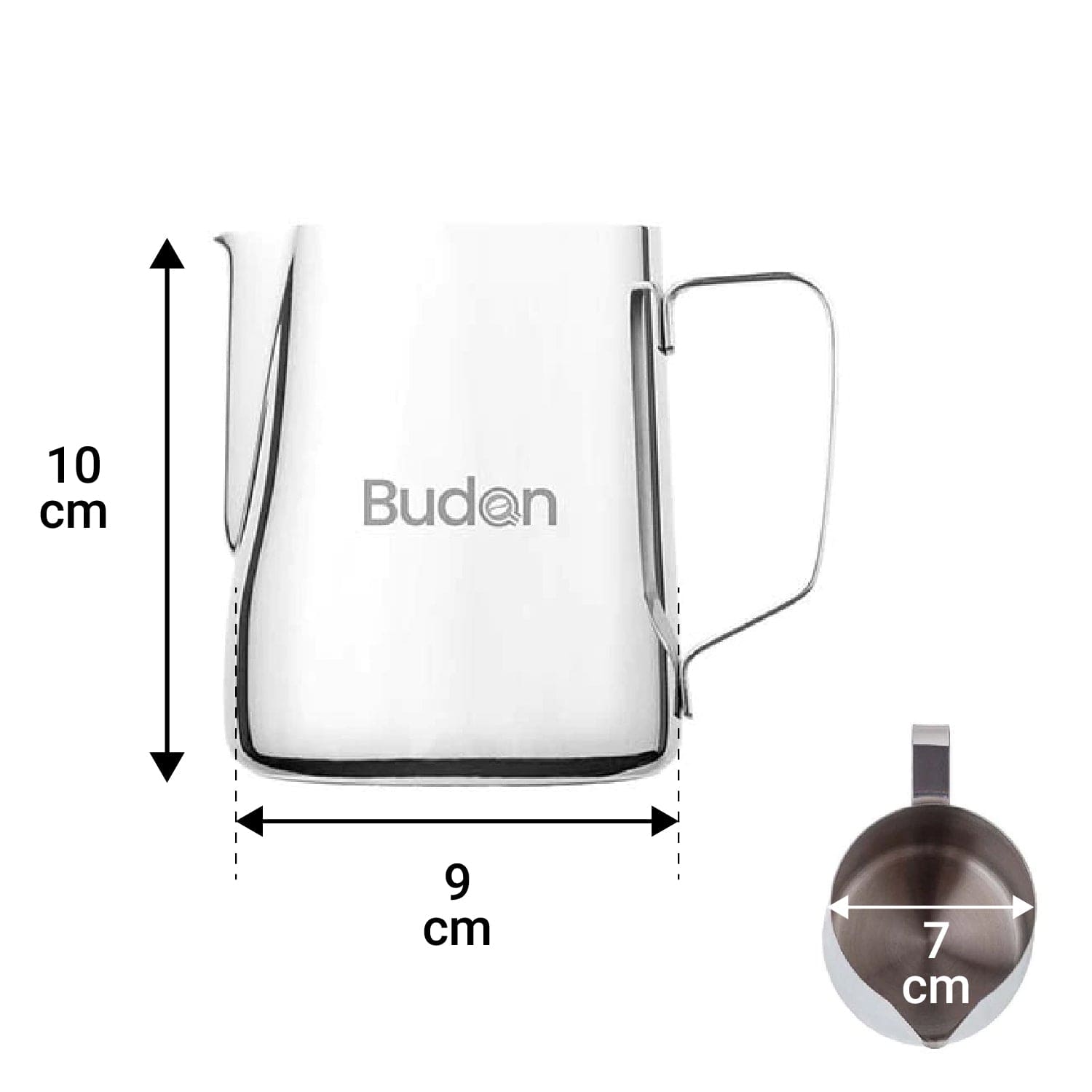
A milk pitcher is the jug you steam and pour milk from, and it does more work than its price suggests. The spout shape controls where the milk lands, the walls tell your hand when to stop steaming, and the volume decides whether the foam sets properly.
Something's Brewing stocks the Budan Milk Pitcher from Rs. 999, available in stainless steel with several colour finishes.
What is a milk pitcher and why does it matter
A milk pitcher, also called a milk frothing pitcher or steaming pitcher, is a stainless steel jug with a tapered spout used to steam milk into microfoam and pour it into espresso. It is the one tool that sits between a decent cappuccino and a bad one.
Latte art depends on two things: milk textured into smooth microfoam, and a pour you can steer. The pitcher affects both. A tapered spout concentrates the flow into a thin stream, which is what lets you draw a line through the crema rather than dumping foam on top. A wider spout gives a softer, more forgiving pour that suits filling a cappuccino but will not hold a pattern.
Stainless steel is the standard material because it conducts heat quickly, and that matters more than it sounds. You judge milk temperature by touching the side of the jug, and steel tells you when to stop long before a thermometer would.
How to steam and pour with a milk pitcher
Fill the jug to about one third with cold milk. Under filling makes the milk too shallow to form a whirlpool, and over filling leaves no room for it to expand.
- Hold the steam wand tip just below the surface for two or three seconds, listening for a steady hiss as air is drawn in.
- Submerge the tip slightly to create a whirlpool, folding the foam through the milk rather than leaving it sitting on top.
- Stop at 60 to 65 degrees Celsius, when the jug is too hot to hold comfortably. Past 70 the proteins break down and the foam turns coarse.
- Knock the jug once on the counter to pop large bubbles, then swirl until the milk looks glossy.
- Pour from height to combine with the espresso, then drop the spout close to the surface at the end to float the design.
For the ratios behind each drink, the guide to latte vs cappuccino covers how much milk and foam each one takes.
What to look for in a milk frothing pitcher
Capacity should match your usual drink. A 350ml jug suits one cappuccino or latte. A 600ml jug handles two drinks or a single large latte. Steaming a small amount of milk in a large jug rarely works, since the wand cannot reach deep enough to build a whirlpool.
Spout shape is the difference between pouring and drawing. Sharp and tapered for latte art, rounded for general use.
Handle comfort matters because you hold the jug throughout steaming and pouring, and a handle that sits awkwardly costs you control at exactly the wrong moment.
Wall thickness affects how quickly you feel the temperature change. Thinner walls transmit heat faster, which makes judging by hand easier.
How to clean and maintain a milk pitcher
Rinse immediately after every use, while the jug is still warm. Milk residue dries hard and takes far more effort to remove once it has set.
Wash with warm soapy water regularly, and use a descaling solution if scale builds up from hard water. Store the jug dry, since standing moisture is what causes spotting on steel over time. The machine cleaning range covers descaling solutions if you need one.
A steaming pitcher only earns its keep alongside a machine with a steam wand, so if you are still choosing one, the espresso machines range is the place to start. Pair it with drinkware sized to the drink, since a cappuccino poured into an oversized mug loses its foam depth.