
Budan X7 Fully Automatic Coffee Machine
Elevate Your Workplace with the Best Coffee Machines for Office
Choosing the Best Coffee Machine for Office Use
An office coffee machine has one job: deliver a consistent cup fast enough that nobody gives up and walks to the cafe down the road. Everything else follows from team size and how the machine gets looked after.
For most offices the answer is a fully automatic bean to cup machine sized by cups per day rather than headcount: roughly 25 to 30 cups for a team of fifteen, 70 to 80 for a team of forty. Something's Brewing supplies coffee machines for office and corporate use across India, and the machines in this collection handle 30 to 45 cups a day.
Best coffee machine for office by team size
Work on one and a half to two cups per person on a working day, then add a margin.
| Team size | Cups per day | Machine type | What to check |
|---|---|---|---|
| Under 15 | 25 to 30 | Compact bean to cup or semi automatic | Footprint, 1.2 litre tank or larger |
| 15 to 40 | 30 to 80 | Fully automatic bean to cup | 1.7 litre tank, built in grinder, milk system |
| 40 to 100 | 80 to 150 | Two units in separate zones, or a commercial single group | Direct water line, recovery time between shots |
| 100 and above | 150 plus | Commercial multi group, or vending for volume | Plumbing, duty cycle, service agreement |
Under fifteen people. A compact bean to cup or a semi automatic machine is enough. A single unit at 30 cups a day covers the load with headroom, and a smaller footprint matters more than throughput in a pantry that also holds a microwave and a sink. Our small coffee machines range covers this end.
Fifteen to forty people. This is where a fully automatic machine earns its keep. A built in grinder, a milk system and a one touch menu mean nobody has to learn technique, and the machine recovers fast enough to serve a queue after a meeting. Refilling becomes the bottleneck before brewing does, so tank size matters more than people expect.
Forty people and up. One machine will not do it. Either run two units in different zones or move to a commercial grade machine with a direct water line. The failure mode at this size is always the same: a queue at 10am that gets long enough that people stop joining it. The larger tiers in the table sit outside this collection, so talk to us about a commercial specification.
Be honest about the number. A machine running at its stated ceiling every single day wears out considerably faster than one running comfortably below it, and the replacement cost dwarfs the saving on buying one size down.
Which type of office coffee machine is best for your setup
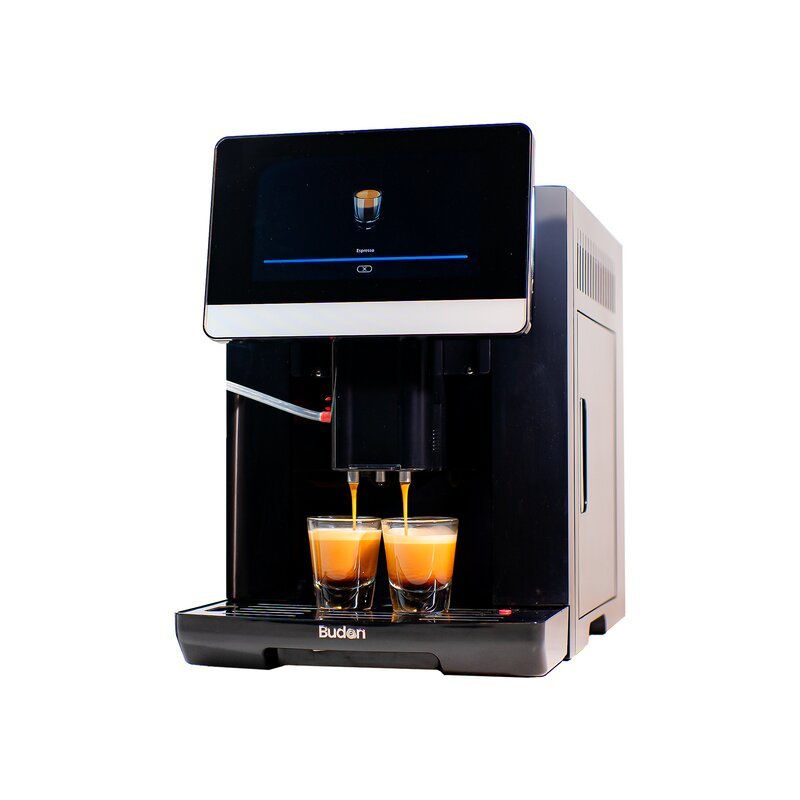
Fully automatic and bean to cup. Beans in, drink out, with grinding, dosing, brewing and milk handled by the machine. These are the default choice for an office because they need no training and produce a consistent cup regardless of who presses the button. Bean to cup machines grind per drink, which is the single biggest factor in how the coffee tastes.
Semi automatic espresso machines. Better coffee in the right hands, worse coffee in the wrong ones. These suit an office with someone who actually wants to pull shots, or a client facing area where presentation matters. Semi automatic machines need a separate grinder and somebody willing to dial it in.
Coffee vending machines and dispensers. Built for volume and simplicity rather than quality. If you are serving a factory floor, a large shift based workplace or a reception area with heavy footfall, a vending machine for office use is the right tool. Ours covers tea alongside coffee, which matters in most Indian workplaces.
Pod and capsule machines. The lowest effort and the highest cost per cup. They make sense in a guest room, a meeting room or a small satellite office where volume is low and nobody wants to maintain anything.
On pressure, ignore the number on the box. Machines are advertised at 15 or 19 bar, which is the pump maximum. Espresso extracts at around 9 bar at the group head, and every machine in this category reaches it. A higher figure is not a better machine.
Does the machine need a built in grinder
For an office, almost always yes. Coffee begins losing aroma within half an hour of grinding, so a machine that grinds per drink produces a noticeably better cup than one fed pre ground coffee from an open bag. A built in conical burr grinder also removes a second appliance from the counter and one more thing for someone to forget to refill.
The exception is an office that already has a good standalone grinder, or one running a semi automatic setup where a separate grinder gives finer control and can be upgraded on its own. A standalone unit from our coffee grinders range usually outlives the machine it sits next to.
What actually drives the cost
The machine is the smaller number over five years. What you spend is on beans, milk, water filters, descaling solution and the cleaning tablets the machine asks for. Cost per cup is where the real comparison sits, and that is driven by the dose the machine uses and whether people are drinking black coffee or flat whites.
Two things reduce the bill more than anything else. Filtered water in the tank, because scale is the main cause of premature failure and descaling less often saves both solution and service calls. And buying freshly roasted beans in a sensible quantity, since a four week cycle wastes less than a bulk sack that goes stale by week eight.
Capsule machines invert this. The machine costs little and every cup costs several times more, which only works at low volume.
Where to put it
Away from the main work zone and close to a sink and a plug. A machine in the middle of an open plan floor generates noise and conversation exactly where people are trying to concentrate, and grinding runs at 65 to 75 decibels, which carries.
A break room or a common area works best, with enough counter either side to set cups down and a bin within reach for grounds and used cups. If there is room for two or three people to stand without blocking a walkway, the coffee station becomes a place people actually talk, which is most of the point.
Plumbing matters for larger machines. Anything on a direct water line needs to be placed where a supply can reach it, and that decision is much cheaper made before installation than after.
Who owns the cleaning
Decide this before the machine arrives, in writing, with a name against it. Machines in offices fail far more often than machines at home, and it is almost never because they work harder. It is because nobody owns the maintenance.
The daily jobs are small: empty the drip tray and the grounds container, wipe the steam wand, refill the water reservoir. Weekly, run the machine's self cleaning cycle and wash the milk circuit properly, because a milk system left to itself is both a hygiene problem and the most common reason an office machine gets written off. Descaling runs every one to three months depending on water hardness, and most Indian cities sit at the shorter end of that. Our machine cleaning range covers descalers, tablets and brushes.
Fit a water filter if the building has hard water. It is the cheapest thing you can do to extend the life of the machine.
Beans, milk and the rest of the setup
A good machine with stale beans makes worse coffee than a modest machine with fresh ones. Work through beans inside four to six weeks. Medium and medium dark roasts suit an office because they taste right as espresso, as a long black and under milk, which covers almost everything people order. Lighter roasts are rewarding but less forgiving across a mixed set of drinks.
Stock decaf and a tea option. In most Indian offices a meaningful share of people are not drinking coffee after lunch, and a machine that serves one drink only gets used half as much. Plant based milk is worth having for the same reason, particularly for health conscious employees.
The small things get forgotten and then complained about: mugs sized to the drink, stirrers, sugar, and somewhere to put a used cup. Our drinkware range covers the cups.
What good office coffee actually changes
The honest version is modest and real. People take a short break at a machine that works, and those breaks are where informal conversation between teams happens. A machine that produces something people want is used. One that produces thin, bitter coffee gets ignored while people walk out for a paid cup, which costs the business both time and goodwill.
It also removes a small daily irritation, and small daily irritations are what people actually remember about a workplace. That is a reasonable thing to spend money on without needing to claim it transforms productivity. For the day to day side of it, our guide to using a coffee machine in the office covers the practicalities.
Why Something's Brewing for office coffee
We supply, install and service office machines across India, with domestic parts and a technician who can come out rather than a support ticket. Every machine is specified against cups per day rather than a brochure figure, because the commonest mistake in office coffee is buying a machine one size too small.
We will tell you when a cheaper machine is the right answer. Both our Bangalore and Surat stores have a Coffee Experience Centre where you can pull shots on the machines before committing, and we can arrange a demo at your office for larger installations. Browse the full range of automatic coffee machines to see what fits.