Small coffee machines fit espresso capability into a footprint that suits a counter, a pantry or a kiosk rather than a full cafe bar. You give up batch capacity and simultaneous brewing, not cup quality.
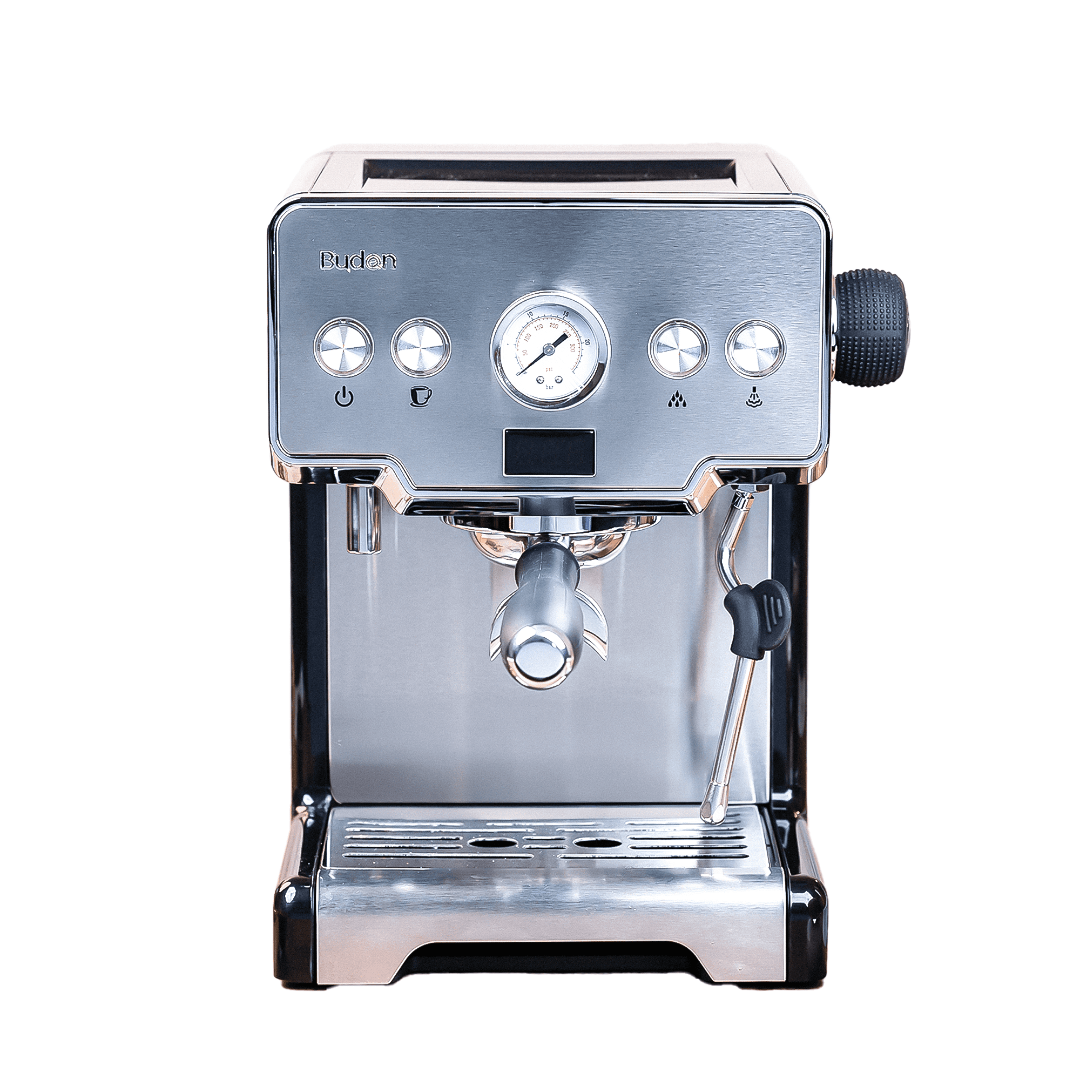
Something's Brewing stocks compact machines from Budan, from the One Touch at Rs. 15,299 up to the Inbuilt Espresso Machine at Rs. 44,999, covering offices, small cafes and home kitchens where counter space is the constraint.
How small is a small coffee machine
A small coffee machine is a single group unit designed to occupy roughly a quarter of the width a commercial two group machine needs, while running the same 15 bar pressure and thermoblock heating.
The trade off is volume, not quality. These machines serve between 7 and 30 cups a day comfortably, and the compact tanks between 1.2 and 2.8 litres mean refilling more often in a busy setting. What you keep is proper espresso extraction, a working steam wand and a 58mm portafilter on two of the three models here.
Thermoblock heating is part of why they stay small. Instead of holding a large volume of water at temperature, a thermoblock heats water on demand as it passes through, which cuts both the internal bulk and the warm up time. The trade off is that sustained steaming is weaker than on a machine with a dedicated steam boiler, so texturing milk for several drinks in a row takes longer.
Which small coffee machine suits your setup
The Budan One Touch at Rs. 15,299 is fully automatic and takes pods, capsules and ground coffee, which makes it the simplest option for an office pantry or a hotel room where nobody wants to learn technique. It is the smallest of the three and the one that needs the least training to use.
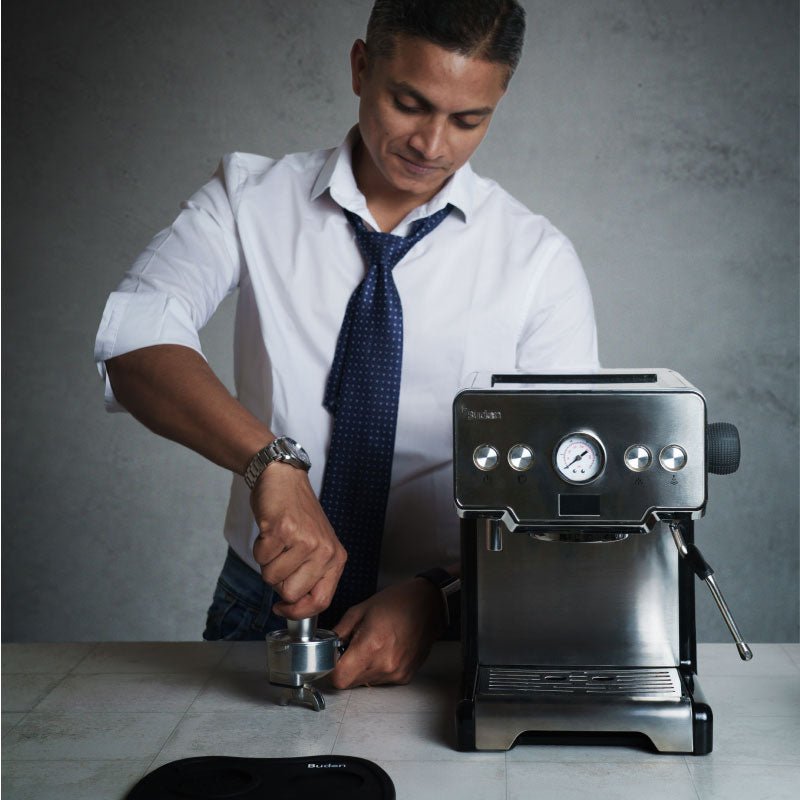
The Budan Espresso Machine from Rs. 22,199 is semi automatic with a 58mm portafilter, so it suits a small cafe or a serious home setup where someone will actually dial in a grind. You control dose, tamp and shot timing, which is where the difference between an acceptable espresso and a good one lives.
The Budan Inbuilt Espresso Machine at Rs. 44,999 adds a 250g conical burr grinder and a 2.8 litre tank, which removes the need for a separate grinder on the counter. That is the practical choice when space is genuinely tight, since one unit does two jobs and the hopper holds enough for a full day of service.
What to check before buying a compact machine
Cup volume per day decides everything else. Seven to ten cups suits a small office. Twenty five to thirty starts pushing what a single group compact machine handles without queuing. Be realistic here rather than optimistic, since a machine running at its ceiling every day wears out faster than one running comfortably below it.
Tank capacity determines how often someone refills. 1.2 litres is fine for a home or small pantry, 2.8 litres for steadier commercial use. In an office, the refilling job usually falls to whoever notices first, so a larger tank is worth the extra footprint.
Portafilter size matters for accessories and longevity. 58mm is the commercial standard, which means portafilters, baskets and tampers are easy to source and replace. A non standard size limits your options and can make a repair harder years down the line.
Built in grinder or separate comes down to counter space against flexibility. An integrated grinder saves room and a purchase. A standalone unit from the coffee grinders range gives finer control, can be upgraded on its own, and outlives most machines.
Milk capability is worth checking against what you actually serve. If cappuccinos and lattes are on the menu, the steam wand matters as much as the brew group, and you will want a milk pitcher sized to your usual drink alongside it.
Pressure ratings on the box read 15 bar across all three. That is the pump maximum, not what reaches the coffee, which sits nearer 9 bar at the group head. It is not a point of difference between machines, and a higher number on a competing product does not mean better espresso.
Where compact machines work well
Offices and pantries. Fresh coffee without dedicating a corner of the kitchen to it. A fully automatic model works best here, since anyone can use it without instruction.
Small cafes and kiosks. Enough capability to serve a proper espresso menu from a counter that could not house a two group machine. A semi automatic with a 58mm portafilter is the sensible choice.
Food trucks and mobile setups. Compact footprint and lower power draw matter more than throughput, and a machine that fits a service window is worth more than one that technically brews faster.
Hotels and guest areas. A small machine in a breakfast area or a suite gives guests something better than instant without staffing it.
Home kitchens. Most Indian kitchens have limited counter run, and a compact machine leaves room for a grinder, a kettle and everything else that already lives there. The home coffee machines range covers the wider set of options.
Small machine or full size
A compact machine is the right call when counter space is limited and demand is steady rather than peaked. It struggles when several drinks are needed at once, because a single group and a smaller boiler cannot keep pace during a rush.
The clearest symptom is waiting. If your setting produces bursts, a morning queue or a conference break, a compact machine will hold you up while it recovers temperature between shots. Steady all day demand is different, and a small machine handles that comfortably.
If you are serving a queue, look at the espresso machines range instead, where dual boilers and larger tanks handle back to back drinks. For office deployment specifically, the office coffee machines range covers larger capacity options built for shared use.
Keeping a compact machine running
Wipe the steam wand after every use, empty the drip tray daily, and backflush weekly on models that take a blind basket.
Descaling matters more on small machines than large ones, because a smaller boiler scales up faster in hard water. Every one to three months is the right interval in most Indian cities, and filtered water in the tank stretches it considerably. The machine cleaning range covers descaling solutions and brushes.
In a shared setting, decide early whose job the cleaning is. Machines in offices fail more often than machines at home, not because they work harder but because nobody owns the maintenance.
Pair the machine with fresh coffee beans roasted within the last month. A compact machine with good beans beats a large one with stale coffee every time.