Italian Espresso Culture and How to Bring the Ritual Home
Italian espresso is a 25 to 30 ml shot drunk standing at the bar counter, usually in three or four mouthfuls and often inside two minutes. It is ordered as "un caffè" rather than an espresso, served in a preheated thick walled demitasse, and treated as a punctuation mark in the day rather than a drink to linger over.
That speed is the part people misread. It is not rushing. It is a ritual with its own rules, and almost all of them are about respecting the coffee rather than the clock.
How Italians actually drink coffee
Walk into any bar in Rome or Milan and the sequence is the same. You pay at the till, take the receipt to the counter, order, and the shot arrives in front of you within seconds of being pulled. You stir in sugar if you take it, drink it where you stand, and leave.
Sitting down changes the transaction entirely. Table service carries a separate charge in most places, which is why the counter stays full and the tables stay empty during the morning rush. The price of a caffè at the bar is kept deliberately low by convention, closer to a daily utility than a treat.
The other rule worth knowing is timing. Milk based coffee belongs to the morning in Italy, paired with a cornetto before work. Ordering a cappuccino after lunch is not forbidden, but it marks you out, because milk is considered heavy on a full stomach. After a meal, Italians drink a caffè, and nothing else.
Sugar is far more common than specialty coffee circles outside Italy assume. A quick stir, a short drink, and most of the sugar stays at the bottom of the cup. The espresso is dark and robusta inclusive enough that the sweetness balances it rather than masking it.
Italian coffee drinks worth knowing
The names travel badly, which is how a macchiato in Mumbai ends up unrecognisable to a Neapolitan. Ordering accurately is mostly a matter of knowing what the word does, and the coffee jargon list covers the wider menu.
- Caffè: a single espresso, the default order
- Caffè doppio: a double shot, less common in Italy than abroad
- Ristretto: the same dose with half the water, shorter and sweeter
- Caffè lungo: more water through the same puck, larger and more bitter
- Caffè macchiato: espresso marked with a spoon of foamed milk
- Caffè corretto: espresso corrected with a splash of grappa, sambuca or brandy
- Marocchino: espresso, cocoa powder and a little foamed milk in a small glass
- Caffè shakerato: espresso shaken hard with ice and sugar, a summer drink
- Caffè latte: milk and coffee, usually made at home for breakfast rather than ordered at a bar
One trap: ask for a "latte" in Italy and you will be handed a glass of milk, because that is what the word means.
Espresso Romano and the lemon question
Espresso Romano is a shot served with a twist or wedge of lemon rind, sometimes rubbed around the rim before drinking. The citrus oil lifts the aroma and cuts through the bitterness, and it does genuinely change the cup.
What it is not is a Roman tradition. You will struggle to find it on a menu in Rome, and most accounts trace its popularity to American cafes attaching an Italian name to a local habit. It is worth trying once at home for the aroma alone, but it is not how Italians drink coffee.
The demitasse and why cup size matters
A demitasse is the small thick walled cup espresso is served in. The name is French for half cup and the capacity is usually 60 to 90 ml, which looks oversized for a 30 ml shot until you understand what the extra space is doing.
Three things make the cup part of the recipe. The thick porcelain walls hold heat, so a shot that takes a minute to drink does not drop 15 degrees in the process. The narrow tapered base keeps the crema layer concentrated rather than spread thin across a wide surface. And the headroom lets the aromatics collect above the liquid, which is most of what you taste.
|
Cup |
Capacity |
Serves |
|
Demitasse |
60 to 90 ml |
Single or double espresso |
|
Cortado glass |
110 to 130 ml |
Cortado, marocchino |
|
Cappuccino cup |
150 to 180 ml |
Cappuccino, flat white |
|
Latte glass |
220 to 280 ml |
Caffè latte, latte macchiato |
Preheating is not optional in Italy. Bars keep cups on a warming tray or rinse them with hot water before pulling, because a cold cup pulls several degrees out of the shot in the first second. If you are building a setup, a set of proper demitasse cups does more for the experience than most people expect from something that holds no mechanism at all.
Italian roast coffee and Italian coffee beans
Italy grows no coffee. Every bean arrives as an import and the Italian contribution is roasting and blending, which is where the national style was built.
"Italian roast" as a label describes one of the darkest commercial roast levels, taken well into second crack, with an oily surface and a flavour profile dominated by roast character rather than origin. It is a naming convention used mostly outside Italy, and it does not describe what Italian roasters actually do today.
The real picture is regional. Northern roasters around Milan and Turin work noticeably lighter, often with high arabica blends that stay sweet and balanced. Naples and the south roast considerably darker and lean heavily on robusta, producing the thick, bitter, syrupy shot with a dense crema that southern Italians consider the only correct espresso. Neither is wrong, and the gap between them is wider than the gap between a northern Italian blend and a modern specialty one.
What they share is a preference for blends over single origins. An espresso blend is engineered for consistency across the year and for body that survives sugar and milk, which is why a well made Italian blend tastes the same in February and August. If you want to work in that tradition, a medium dark blend from the espresso beans range is a closer starting point than a bright single origin.
Bringing the ritual home
The equipment matters less than the three things Italian bars never compromise on: coffee ground moments before brewing, a cup that is already hot, and a shot drunk immediately rather than left to sit.
The grinder is the piece that decides everything. Espresso needs fine adjustment and consistency, and no machine can correct for a grind that is uneven. An espresso grinder with proper micro adjustment is the upgrade that changes the cup most, which is unintuitive when the machine is the more visible purchase.
Moka pot vs espresso machine
The moka pot is in most Italian kitchens and in very few Italian bars, and that distinction matters. It brews at around 1.5 bar of steam pressure rather than nine, so what comes out is concentrated and strong but not espresso. There is no real crema, the body is different, and the flavour leans darker and more bitter. It is also inexpensive, needs no electricity and lasts decades, and Bialetti moka pots are the design most people picture when they think of Italian home coffee.
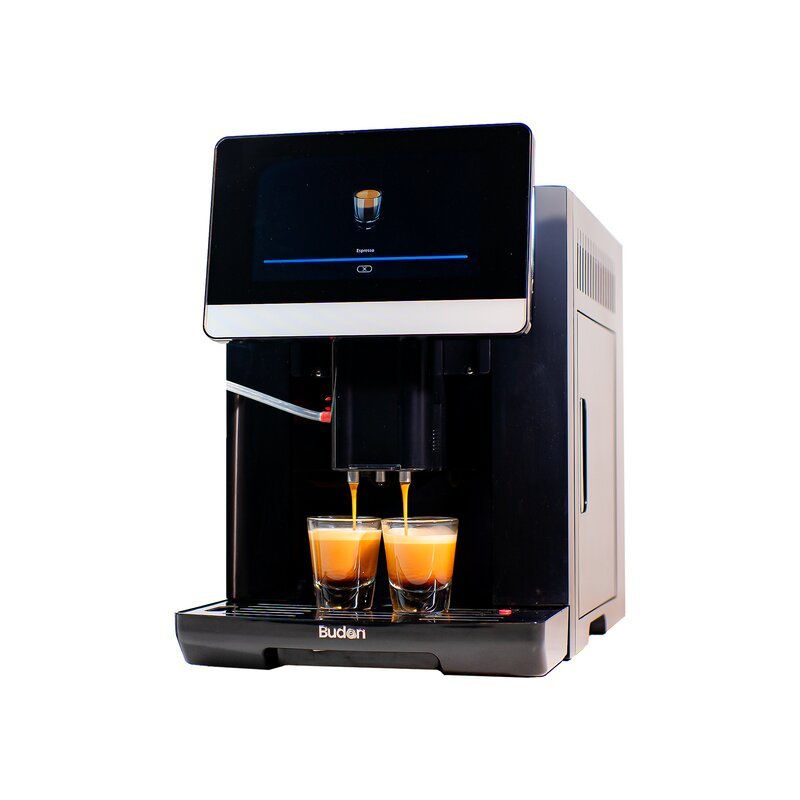
A pump machine gives you actual espresso, with the pressure, the crema and the ability to pull a ristretto or steam milk properly. It costs considerably more, takes real practice and demands a matching grinder. For a collector or anyone who wants to develop skill rather than just make coffee, the semi automatic machines are where the Italian tradition actually lives.
Most serious home setups end up with both. The moka pot for a weekday morning, the machine for the weekend.
Italian machines worth knowing
Italy still builds most of the espresso machines the rest of the world aspires to own, and the lineage is genuinely unbroken. Lelit machines from Brescia cover the serious home range, from single boiler models up to the dual boiler Bianca with its paddle controlled pressure profiling.
At the top end, La Marzocco has been making espresso machines in Florence since 1927 and effectively defined the saturated group head. The La Marzocco range brings commercial architecture into a domestic footprint, which is why the Linea Mini and Micra sit on so many collectors' counters.
For a first proper machine, the Gaggia Classic Pro remains the one the community points to, largely because its 58 mm commercial portafilter and mechanical simplicity keep it useful for years rather than months.
Making it a ritual rather than a routine
The Italian lesson is not the equipment. It is that the coffee gets your full attention for two minutes and then the day continues.
Warm the cup. Grind fresh. Pull the shot and drink it standing up, before it cools, without a screen in front of you. That is the whole ritual, and it works with a moka pot on a weekday morning as well as it works with a dual boiler.