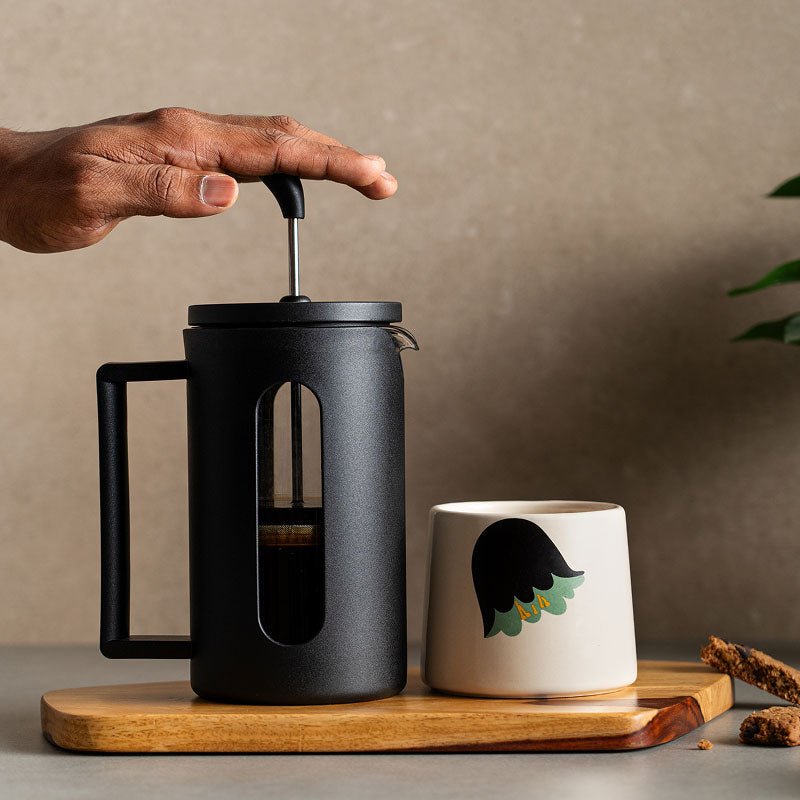
Adding a grinder to your home brewing setup changes more than convenience, it changes flavour. Whole coffee beans retain their essential oils and aroma far longer than pre ground coffee, which means grinding at home puts the freshest possible coffee in your cup every single time. Before you buy one, here are the five factors that actually determine whether a grinder is worth the money.
Manual vs Electric at a Glance
|
Factor |
Manual Grinder |
Electric Grinder |
|
Speed |
Slower, more deliberate |
Fast, seconds per dose |
|
Portability |
Compact, travel friendly |
Bulkier, countertop bound |
|
Price |
Generally more affordable |
Generally higher upfront cost |
|
Experience |
Hands on, ritual focused |
Convenience focused |
1. Type of Grinder
Grinders split into two broad types, manual and electric. Manual grinders trace back to the 17th century, while electric grinders first appeared in the 20th century in the US. A manual grinder suits anyone who enjoys a slower, more deliberate brewing ritual, while an electric grinder suits anyone who wants coffee ground in seconds without the extra step. Manual grinders also tend to be more portable and budget friendly, while electric grinders cost more but deliver noticeably more speed and consistency for daily use.
2. Grind Size Options
Grind size directly shapes flavour and extraction quality, and different brewing methods, from espresso to French press, each need a specific grind range to perform well. A grinder with a wide range of adjustable settings gives you the flexibility to brew multiple ways without owning multiple grinders. The Budan Electric Espresso Grinder offers 31 grind settings at Rs. 7,999, covering everything from Turkish fine and espresso fine through to a full coarse grind in one machine.
3. Grind Consistency
Consistency matters as much as grind size itself, since uneven particle size means uneven extraction, and uneven extraction means an unbalanced cup regardless of how good your beans are. A grinder that produces uniform particles ensures every bit of coffee interacts with water the same way, which is what gives you a genuinely balanced brew rather than a mix of over and under extracted grounds in the same cup. The Fellow Ode Grinder Gen 2 is well regarded specifically for this kind of particle uniformity.
4. Ease of Maintenance
Maintenance is easy to overlook when comparing grinders on spec sheets alone, but it directly affects how long a grinder performs well. Look for models with removable parts and straightforward cleaning steps, this prevents residue buildup and keeps grinding efficiency consistent over months of daily use. A grinder that's genuinely easy to maintain also tends to last longer, since trapped oils and old grounds are one of the most common causes of premature wear. If you're weighing a manual option specifically for this reason, the Timemore Chestnut C3S at Rs. 6,399 disassembles easily for a quick clean.
5. Durability
Durability comes down to build quality, look for grinders constructed from solid materials with sturdy metal burrs rather than lightweight plastic components that wear down quickly. Investing a bit more upfront in a well built grinder generally pays off over years of daily use rather than needing a replacement within a year or two.
Other Factors Worth Weighing
Beyond these five, noise level, grinding speed, and your overall budget are all worth factoring into the final decision. If you want to explore the full range before deciding, the electric grinders collection covers additional powered options, and the hand grinders collection is worth a look if a manual grinder fits your routine better.
Final Thoughts on Choosing the Right Home Grinder
Choosing a coffee grinder for home comes down to weighing these five factors, type, grind size options, grind consistency, ease of maintenance, and durability, against how you actually brew day to day. Whether precision in grind size matters most to you or long term durability does, getting this decision right sets the foundation for every cup that follows.