French Press Coffee Guide for Brewing a Rich and Balanced Cup at Home
French Press is one of the simplest ways to brew coffee while still giving you control over flavour, strength and texture. Unlike brewing methods that use paper filters, a French Press uses a metal mesh filter that allows more oils and fine particles to remain in the cup, creating a rich and full-bodied coffee experience.
Whether you are new to manual brewing or looking for a more consistent French Press recipe, understanding the right coffee grind, water ratio, brewing time and technique can help you prepare a better cup at home.
What Is French Press Coffee?
French Press is an immersion brewing method where ground coffee is steeped in hot water before being separated using a metal plunger filter.
During brewing, coffee grounds remain in direct contact with water, allowing flavour compounds and oils to extract into the final cup. This creates a heavier body and richer mouthfeel compared to many paper-filter brewing methods.
Unlike automatic coffee machines, French Press brewing gives you more control over variables such as coffee quantity, brewing time and water temperature.
Why Choose a French Press Coffee Maker?
French Press remains popular among coffee lovers because it offers a simple brewing process without requiring complicated equipment.
Why Do People Choose French Press Coffee?
French Press coffee is preferred by many people because:
- It creates a full-bodied cup with noticeable texture
- It does not require electricity
- It allows control over brewing time and coffee strength
- It is suitable for brewing multiple cups at once
- It works well with different coffee styles and roast profiles
For people who enjoy experimenting with manual brewing methods, exploring different French Press coffee makers can help you find the right size and design for your routine.
What Do You Need to Brew French Press Coffee?
A French Press setup is simple and requires only a few essentials.
French Press Coffee Maker
The French Press itself holds the coffee and water while allowing the grounds to steep before separation.
Fresh Coffee Beans
Freshly roasted coffee generally provides better flavour and aroma compared to coffee that has been stored for long periods.
Coffee Grinder
A consistent grind is important because French Press relies on immersion brewing. A grind that is too fine can make the coffee over-extract and increase sediment in the cup.
A quality coffee grinder allows you to adjust grind size according to your brewing preference.
Coffee and Water Measurement
Using consistent measurements makes it easier to repeat a recipe and adjust the flavour based on your preference.
A coffee weighing scale can help measure coffee and water accurately.
How to Make French Press Coffee Step by Step
Follow these steps to prepare a balanced French Press coffee at home.
Step 1: Measure Your Coffee and Water
Start with a consistent coffee-to-water ratio.
A common starting point is around 1:15, meaning one gram of coffee for every 15 grams of water. You can adjust this depending on whether you prefer a stronger or lighter cup.
The ideal ratio can vary based on your coffee, grind size and personal preference.
Step 2: Grind Coffee Coarsely
French Press usually works best with a coarse grind.
A coarse grind helps slow extraction and makes it easier to separate the coffee grounds after brewing.
Grinding too fine may result in:
- Bitter flavours
- Excess sediment
- A muddy texture
Step 3: Add Hot Water and Allow Coffee to Bloom
Add hot water to the coffee grounds and make sure all the grounds are evenly saturated.
Allowing the coffee to sit briefly after adding water helps release trapped gases and improves extraction.
Water temperature should be hot but not boiling, as extremely high temperatures can affect flavour balance.
Step 4: Stir and Let the Coffee Brew
After adding water, gently stir the coffee to ensure even contact between the grounds and water.
Allow the coffee to steep before pressing. Many recipes use around four minutes as a starting point, but brewing time can be adjusted depending on taste.
A longer brew time generally increases extraction, while a shorter brew time can produce a lighter cup.
Step 5: Press Slowly and Serve Immediately
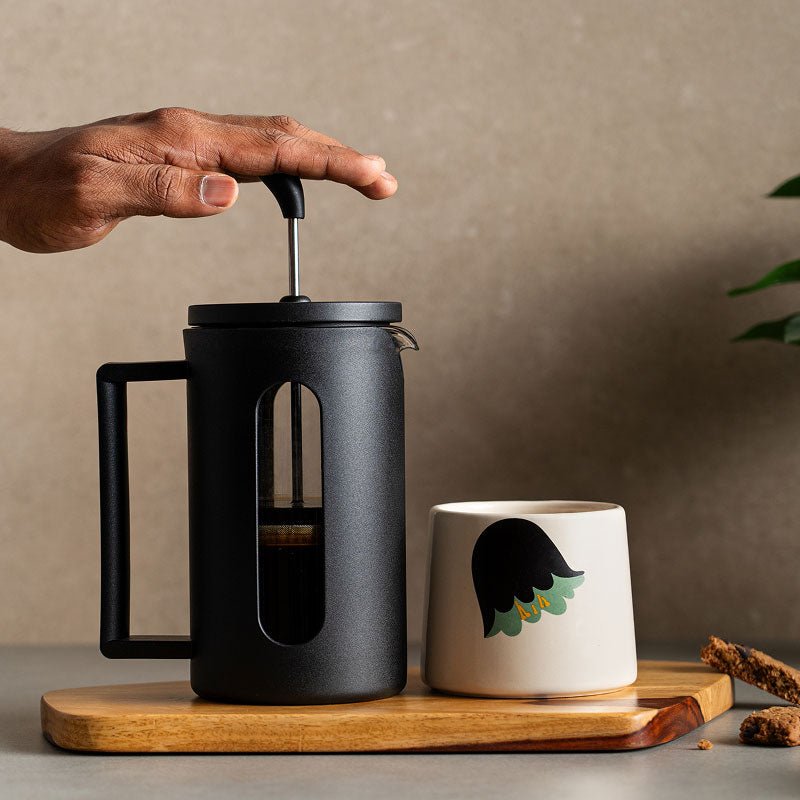
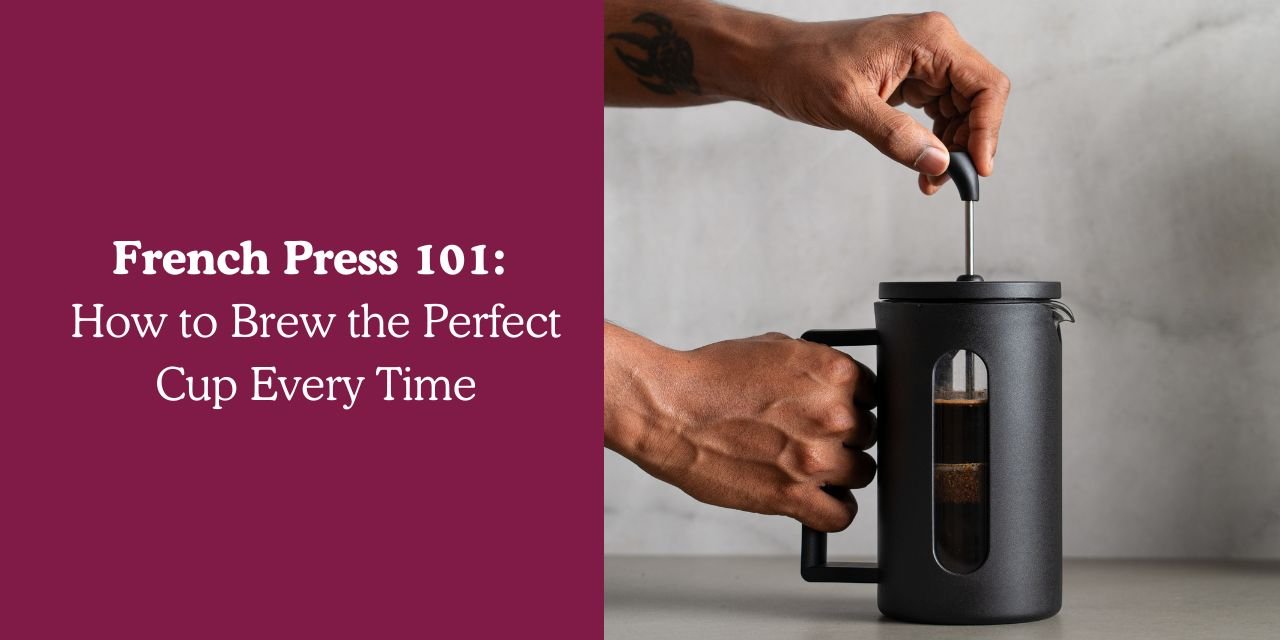
Press the plunger down slowly and steadily.
Avoid forcing the plunger, as excessive pressure can disturb the coffee grounds and increase sediment.
Once brewed, transfer the coffee into your cup or serving container instead of leaving it in the French Press, as continued contact with the grounds can change the flavour over time.
What Coffee Ratio Works Best for French Press?
There is no single ratio that works perfectly for everyone.
A common starting point is:
|
Coffee |
Water |
Result |
|
1:15 ratio |
Balanced starting point |
Smooth and flavourful cup |
|
Stronger ratio |
More coffee per water |
Richer and heavier cup |
|
Lighter ratio |
Less coffee per water |
Softer flavour |
Your ideal ratio depends on the coffee beans, roast level, grind size and personal preference.
For a deeper understanding of coffee measurements, explore the coffee-to-water ratio guide.
Common French Press Mistakes and How to Fix Them
Even with simple equipment, small changes can significantly affect the final cup.
Coffee Tastes Bitter
Possible Causes
- Grind size is too fine
- Brewing time is too long
- Water temperature is too high
How to Fix It
Try using a coarser grind, reducing brewing time or adjusting your recipe gradually.
Coffee Tastes Weak
Possible Causes
- Too little coffee used
- Grind size is too coarse
- Brewing time is too short
How to Fix It
Increase the coffee quantity slightly or adjust the brewing time while keeping other variables consistent.
Too Much Sediment in the Cup
Possible Causes
- Coffee grounds are too fine
- Grinder produces inconsistent particles
- Coffee is poured too aggressively
How to Fix It
Use a more consistent coarse grind and pour slowly after pressing.
Coffee Becomes Bitter After Sitting in the French Press
Leaving brewed coffee with the grounds allows extraction to continue.
Once the brewing time is complete, press and transfer the coffee to another container or serve immediately.
How to Improve Your French Press Coffee
Small improvements can make your French Press coffee more consistent.
Use Freshly Ground Coffee
Grinding coffee immediately before brewing helps preserve aroma and flavour.
Use Consistent Measurements
Repeating the same coffee and water measurements makes it easier to understand what changes improve your cup.
Adjust One Variable at a Time
When experimenting, change only one factor at a time, such as grind size, brewing time or coffee quantity.
This helps you understand what creates the flavour difference.
Keep Your Equipment Clean
Coffee oils and residue can affect flavour over time. Clean the French Press regularly, especially the mesh filter and plunger components.
French Press vs Other Brewing Methods
Different brewing methods create different coffee experiences.
|
Brewing Method |
Coffee Style |
|
French Press |
Full-bodied with more texture |
|
Pour Over |
Cleaner cup with more clarity |
|
Espresso |
Concentrated and intense |
|
Cold Brew |
Smooth and less acidic |
French Press is ideal for people who enjoy a richer mouthfeel and a simple brewing process.
Who Is French Press Coffee Best Suited For?
French Press can be a good choice for:
- Beginners starting with manual brewing
- Coffee drinkers who prefer a richer cup
- People who want a simple brewing method without electricity
- Those who enjoy experimenting with coffee recipes
- Households that prepare multiple cups at once
It may not be the best option for people who prefer a very clean cup with minimal sediment or highly automated brewing.