A drip coffee maker heats water, drips it evenly over a bed of ground coffee, and lets gravity pull the brewed coffee through a filter into a carafe below. No pressure, no skill, no standing over it. You add coffee and water, press a button, and walk away.
It is the most common way coffee gets made in homes and offices worldwide. This guide covers how a drip coffee maker works, what to look for before buying one, the grind and ratio that get the best out of it, and whether it is the right choice for a kitchen in India.
How does a drip coffee maker work
A drip coffee maker heats water in a reservoir, carries it up through a tube, and releases it over the coffee bed, where gravity pulls it through a filter into the carafe. The full cycle takes four to eight minutes depending on batch size.
That contact time is what gives drip coffee its character. It comes out cleaner and lighter bodied than a French press, and gentler and far less concentrated than espresso, which is why it suits drinking by the mug rather than the shot.
Two things inside that process decide whether a drip coffee maker makes good coffee or mediocre coffee. The first is whether the water actually reaches brewing temperature, which should sit between 92 and 96 degrees Celsius. Budget machines often run cooler and produce weak, sour coffee no matter what beans you use. The second is how the water is dispersed. A single spout dripping onto one spot leaves half the coffee bed dry, while a proper showerhead wets everything evenly.
How to choose a drip coffee maker
Judge a drip coffee maker on brew temperature and water dispersion first. Everything else on the spec sheet is convenience rather than cup quality.
|
Feature |
Why it matters |
What to look for |
|
Brew temperature |
Under 90 degrees gives weak, sour coffee |
A stated brewing temperature of 92 to 96 degrees Celsius |
|
Water dispersion |
Uneven wetting means uneven extraction |
A showerhead rather than a single drip spout |
|
Carafe type |
Glass sits on a hotplate that stews the coffee |
A thermal steel carafe if you drink over an hour or more |
|
Capacity |
Half filling a large machine brews badly |
Size it to your usual batch, not your maximum |
|
Filter basket |
Shape affects how the bed settles |
Flat bottom for even beds, cone for a cleaner cup |
|
Programmability |
Convenience only, not quality |
A timer if you want coffee waiting in the morning |
|
Brew strength control |
Adjusts contact time, not coffee dose |
Useful, but no substitute for changing the ratio |
The carafe is the specification most people get wrong. A glass carafe on a warming plate keeps coffee hot by continuing to cook it, and after twenty minutes it tastes flat and burnt. A thermal carafe holds temperature without applied heat, so coffee stays drinkable for well over an hour.
What grind size and ratio should you use for drip coffee
Use a medium grind, roughly the texture of coarse sand, at a coffee to water ratio of around 1:16. That works out to 60g of coffee per litre of water, or about 15g per standard mug.
Grind size matters more than most drip coffee maker owners realise. Too fine and water pools in the basket, over extracting and turning bitter, sometimes overflowing the filter altogether. Too coarse and the water runs straight through, giving you weak, thin coffee that tastes sour rather than simply under strength. A medium grind from a burr grinder gives you a consistent bed that water can move through evenly.
Ratio is where you adjust strength, not the brew strength button. That button usually just slows the drip to extend contact time, which pushes the coffee toward bitterness rather than making it genuinely stronger. If you want a stronger cup, add more coffee.
Bean choice is more forgiving here than with espresso. Drip brewing suits light and medium roasts particularly well, because the long, gentle extraction brings out clarity and origin character that gets buried under pressure. The coffee beans range covers plenty that work.
Drip coffee maker vs pour over vs French press
All three are ways of making filter style coffee, and they differ mainly in how much control you have over the brew.
A drip coffee maker automates the pour. It is consistent, hands off and good for several cups at once, but you cannot adjust how the water hits the bed or how fast it moves through.
Pour over is the manual version of the same process. You control the pour rate, the bloom and the agitation, which produces a noticeably cleaner and more nuanced cup, at the cost of five minutes of attention every morning.
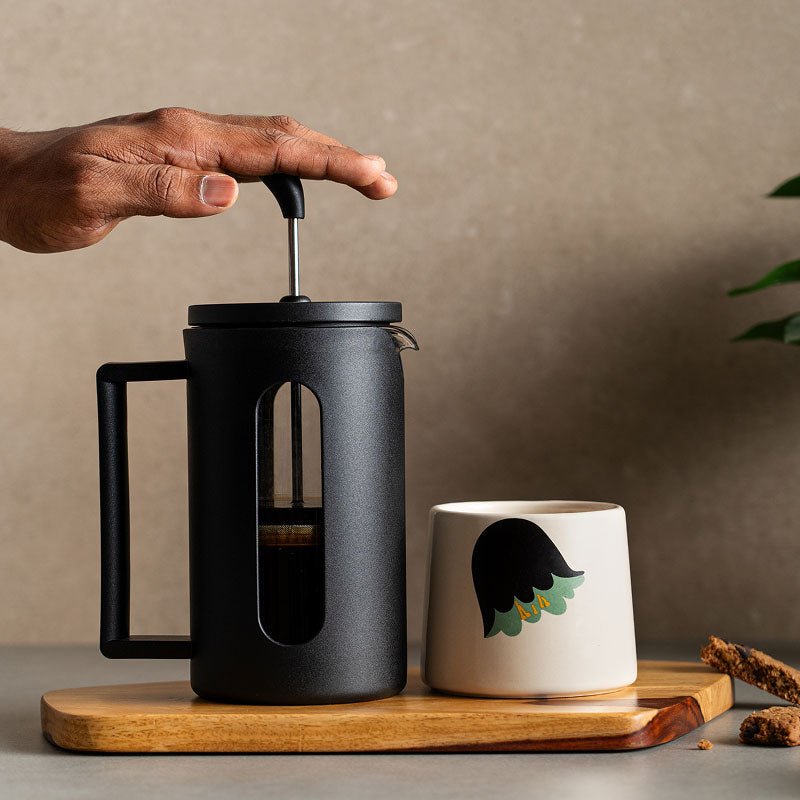
A French press is immersion rather than filtration. The grounds steep in the water instead of passing through it, and the metal mesh lets the oils through, so the result is heavier bodied with more texture and a little sediment.
If you like what a drip coffee maker produces and want to improve it without buying a new machine, pour over is the natural next step. If you like it and want more body, a French press is.
Which filter is best for a drip coffee maker
Paper gives the cleanest cup. It traps oils and fine particles, producing a bright, crisp coffee with no sediment, and it is the only option that removes cafestol, a compound in coffee oils linked to raised cholesterol.
Metal filters let the oils through, so the coffee comes out heavier and rounder with a little sediment at the bottom. They are reusable and produce no waste, which matters more to some people than the difference in the cup.
Cloth sits between the two, clean like paper but with more body retained. It needs rinsing immediately after use and storing damp or frozen, which is why most people give up on it. Whichever you pick, coffee filters are worth buying properly sized to your basket rather than folded to fit.
How to clean and descale a drip coffee maker
Rinse the carafe and filter basket after every brew, and descale the machine every one to three months depending on your water hardness.
Coffee oils build up on plastic and glass, go rancid, and put a stale note into everything brewed afterwards. A rinse takes seconds and prevents it.
Scale is the slower problem. It forms inside the heating element and the water tube, and the first symptom is not a broken machine but a slower brew and a cooler cup, which most people misread as the coffee going bad. Filtered water in the reservoir slows this down considerably, and a proper machine cleaning routine keeps a decent drip coffee maker running for years rather than months.
Are drip coffee makers worth buying in India
For most Indian kitchens, a manual filter brewer makes more sense. Electric drip coffee makers are far less common here than in Europe or the US, the selection is thin, and entry level models are exactly the ones that fail on brew temperature.
If what you actually want is clean, filter style coffee, the manual options do the same job for a fraction of the price and give you more control over the result. Something's Brewing stocks filter coffee makers alongside the wider manual brewers range, which covers pour over drippers, French presses and Moka pots.
A dripper and a kettle will produce a better cup than most entry level drip coffee makers. The only thing you give up is the ability to walk away while it brews, which is genuinely the whole appeal of a drip machine for some people, and there is nothing wrong with valuing that.