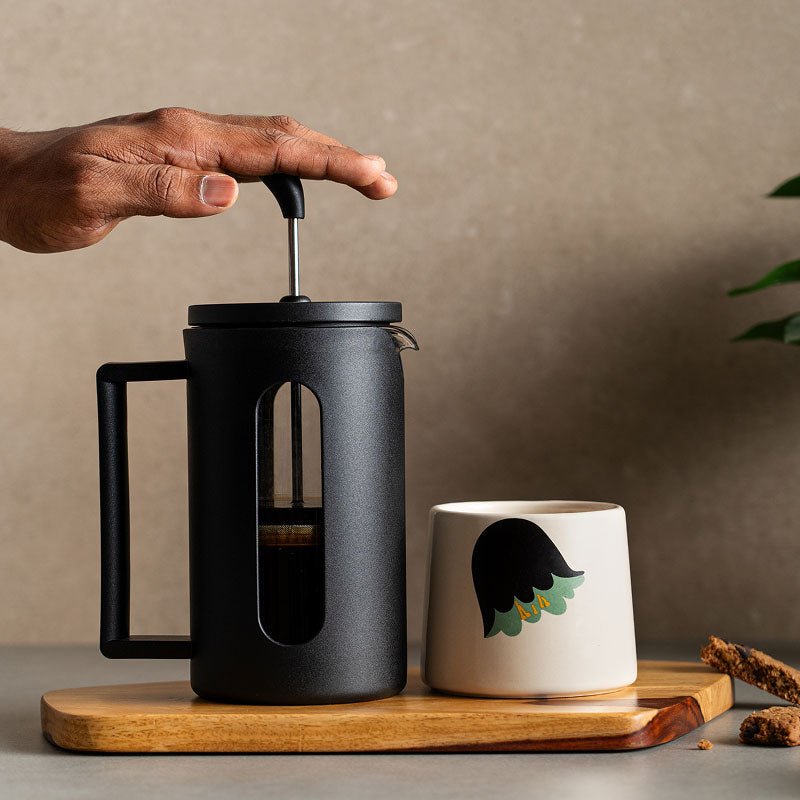
Black coffee has gone from a niche preference to a daily ritual for millions of Indian drinkers. The shift is partly health driven, partly taste driven, and partly generational. Younger coffee drinkers are moving away from the heavily sweetened milk based coffees that defined Indian cafes for decades, and toward cleaner, more expressive cups that show off what good beans can actually taste like. If you are switching to black coffee in 2026 or trying to brew a better cup at home, this guide walks through the brewing methods that work, the beans worth buying, and the home coffee equipment that pairs best with each style.
The brewing method matters more than most people think. The same 18 grams of coffee can taste like a vibrant fruit salad through a pour over, a bold and chocolatey shot through a moka pot, and a rich syrupy espresso through a pump machine. Black coffee is not one drink. It is six or seven different drinks made from the same raw material, separated by how the water and grounds interact.
What Counts as Black Coffee
Black coffee is coffee served without milk, cream, sugar, syrups, or any added sweetener. The only ingredients are coffee and water. Some definitions allow water dilution after brewing (an Americano, for instance, is technically still black coffee), and some purists exclude even that. The widely accepted definition is straightforward: if it is just coffee and water, it counts.
This includes espresso shots, pour over, French press, AeroPress, drip filter, moka pot, cold brew, and traditional South Indian filter coffee when served without milk. It excludes lattes, cappuccinos, mochas, frappes, and instant coffee mixed with sugar packets, regardless of how minimally they are sweetened. The ritual of black coffee is partly about what you remove from the cup, not just what you add.
Health Benefits of Drinking Black Coffee
Black coffee is one of the most studied beverages in nutrition science. The body of research shows real benefits when consumed in moderation, though the exact magnitude depends on the person, the dose, and the broader diet.
Established benefits, supported by major medical reviews, include improved alertness and cognitive performance from caffeine, increased fat oxidation during exercise, antioxidant activity from chlorogenic acids and other polyphenols, and a measured association with reduced risk of type 2 diabetes when consumed regularly. Black coffee is also nearly calorie free, which makes it the only widely available beverage that delivers a stimulant effect without affecting calorie counts in any meaningful way.
The qualifications matter though. Caffeine sensitivity varies widely between individuals, and what is energizing for one person can cause anxiety, sleep disruption, or heart palpitations in another. Pregnant individuals are usually advised to limit intake to under 200mg per day. Anyone with high blood pressure, gastric reflux, or specific heart conditions should consult a doctor before increasing daily coffee consumption.
Caffeine and Calories: How Black Coffee Compares Across Brewing Methods
The amount of caffeine and calories in your cup depends heavily on which method you use. The table below shows typical values for a standard serving. Actual numbers vary based on roast level, grind size, brew time, and bean type, so treat these as starting estimates rather than exact figures.
|
Brewing Method |
Typical Serving |
Caffeine (mg) |
Calories |
|
Espresso (single shot) |
30 ml |
60 to 70 |
1 to 2 |
|
Espresso (double shot) |
60 ml |
120 to 140 |
2 to 3 |
|
Pour Over (V60) |
240 ml |
110 to 140 |
1 to 2 |
|
French Press |
240 ml |
100 to 130 |
1 to 2 |
|
AeroPress |
240 ml |
110 to 130 |
1 to 2 |
|
Moka Pot |
60 ml |
80 to 100 |
1 to 2 |
|
Cold Brew (concentrate diluted 1:1) |
240 ml |
150 to 200 |
2 to 3 |
|
South Indian Filter Coffee (decoction only) |
60 ml |
90 to 110 |
1 to 2 |
|
Instant Black Coffee |
240 ml |
60 to 80 |
4 to 5 |
Best Brewing Methods for Black Coffee
The best brewing method depends entirely on what you want from your cup. There is no single winner. The five methods below cover the practical range of what most home brewers in India will use.
Pour Over (V60, Kalita, Chemex)
Pour over uses a paper filter and a slow controlled pour to produce the cleanest, brightest cup of any brewing method. It is the gold standard for tasting single origin beans and the format most specialty roasters design their light and medium roasts for. Brew time is around 3 to 4 minutes per cup, and the equipment cost is the lowest of any method on this list. Browse our complete pour over coffee dripper range to find a setup that fits your kitchen.
Best for: drinkers who want clarity of flavor and the ability to taste subtle notes from premium beans. Not ideal for: anyone who wants a fast, hands off morning routine, since pour over requires active attention while brewing.
French Press
French press produces a bolder, full bodied cup with more texture than filter brewing. The metal mesh filter lets natural oils and fines through, which gives the coffee a richer mouthfeel but also a slightly muddier finish. It is forgiving of beginner mistakes and works equally well with light, medium, or dark roasted beans. Brew time is 4 minutes plus a slow 20 second press.
Best for: drinkers who prefer bold cups with body, and households that want one brewer for multiple cups at once. Choose a French press for daily home brewing in stainless steel for better heat retention and longevity.
AeroPress
The AeroPress is the swiss army knife of black coffee brewing. It can produce something close to espresso, something close to pour over, or something entirely its own depending on grind, ratio, and immersion time. It is also the most travel friendly brewer, weighing under 200 grams and surviving rough handling without complaint. Total brew time is 90 seconds to 3 minutes. The AeroPress coffee maker is also one of the most affordable serious brewers on the market.
Best for: solo drinkers, frequent travelers, and anyone who wants to experiment with different recipes from the same brewer. Not ideal for: brewing multiple cups at once, since each AeroPress brew makes one or two servings.
Espresso
Espresso is the most concentrated form of black coffee, produced by forcing pressurised hot water through a tightly packed puck of finely ground coffee. The result is a small, intense shot with crema on top and the highest caffeine concentration of any brewing method by volume. Espresso requires the most expensive equipment, the most skill to learn, and the most consistent grinder of any method. Browse our home espresso machine collection for entry level to prosumer options.
Best for: drinkers who want the strongest possible cup, the ability to make milk drinks (when you decide to), and a serious daily coffee ritual. Not ideal for: beginners on a tight budget, since a usable espresso setup including a grinder starts around ₹70,000 to ₹1,00,000.
Moka Pot
The moka pot, sometimes called a stovetop espresso maker, produces a strong concentrated brew that sits between espresso and filter coffee in intensity. It is the cheapest way to make something resembling espresso at home, and it is a kitchen staple in Italy. Brewing takes 5 to 6 minutes and requires no electricity beyond your stove. Find traditional and modern designs in our moka pot collection.
Best for: drinkers who want strong coffee without the cost of an espresso machine, and anyone who appreciates a hands on brewing ritual. Not ideal for: drinkers who prefer cleaner, lighter cups, since the moka pot leans dark and intense regardless of bean choice.
Best Beans for Black Coffee in India
Brewing method matters, but beans matter more. A good cup of black coffee is impossible with stale or low grade beans, regardless of how perfect your technique is. Three principles guide bean selection.
1. Freshness Beats Fame
A bag of beans roasted last week from an unknown roaster will almost always taste better than a famous bag roasted six months ago. Look for a clear roast date on the package, ideally within the last four weeks. Check our specialty coffee bean range from Indian and international roasters for bags shipped fresh from the roaster.
2. Match the Roast to the Method
Light and medium roasts are best for pour over, AeroPress, and filter methods, where you want clarity and origin character. Medium dark and dark roasts work better for espresso, moka pot, and French press, where bolder flavors hold up against the brewing intensity. If you only want to buy one bag for everything, a medium roast single origin is the safest choice.
3. Indian Single Origins Are Genuinely Competitive
Estates from Karnataka, Kerala, Tamil Nadu, and parts of Maharashtra now produce specialty grade beans that compete with the best from Ethiopia, Colombia, and Central America. Buying Indian also means lower shipping costs and fresher beans, since the supply chain is shorter. Look for estate names like Attikan, Ratnagiri, Riverdale, or Baba Budangiris on the bag, which signal traceable single origin sourcing.
Common Mistakes That Make Black Coffee Bitter
If you have switched from milk based coffee and find that black coffee tastes harsh, the problem is usually one of four things, and all of them are fixable.
Mistake 1: Boiling water hitting the grounds. Water at 100 degrees Celsius scorches coffee and extracts harsh bitter compounds. Wait 30 to 45 seconds after the kettle boils before pouring.
Mistake 2: Pre ground coffee from a supermarket. Pre ground coffee loses most of its aromatic character within an hour, leaving only the bitter compounds intact. Buy whole beans and grind right before brewing. A home coffee grinder is the single most important upgrade for home black coffee.
Mistake 3: Wrong grind size. Grind too fine for your brewing method and the water sits too long in contact with grounds, extracting bitterness. Use coarse for French press, medium for AeroPress, medium fine for pour over, and fine for espresso.
Mistake 4: Old or dark roasted beans. Beans roasted past development become inherently bitter, regardless of brewing method. If your coffee tastes burnt, try a lighter roast next time.