Budan Coffee Machine Models: The Complete Guide to the Full Range in 2026
Budan has quietly become one of the most talked about coffee machine brands in India. In just a few years, the Bengaluru based brand has gone from a niche name among home baristas to a full portfolio that covers every kind of coffee drinker, from the solo moka pot user in a studio apartment to the QSR operator pulling 300 shots a day.
The problem most buyers run into is the sheer size of the range. Budan currently sells more than a dozen distinct coffee machines across manual, semi automatic, fully automatic, and commercial categories. Picking the right one is not obvious unless you understand how the lineup is structured.
This guide walks through every Budan coffee machine model sold in India in 2026, explains who each one is built for, and shows you how to match a model to your budget, your brewing style, and your daily cup count. By the end, you will know exactly which Budan machine belongs in your kitchen or cafe.
A quick note before we start: Something's Brewing is an authorised Budan retailer with the full range in stock, demo units available in Bengaluru and Surat, and expert guidance over WhatsApp. Prices in this guide are approximate and move with seasonal offers, so check the product page for the current rate.
About the Budan Brand
Budan is marketed by Coffee Codes India Pvt Ltd out of Bengaluru. The brand takes its name from Baba Budan, the 17th century Sufi saint who is credited with bringing coffee to India by smuggling seven beans from Yemen and planting them in the hills of Chikkamagaluru, Karnataka.
The brand is positioned specifically for Indian conditions. Thermal stability tuned for Indian power supply, stainless steel builds that handle hard water, 58 mm cafe standard portafilters on the espresso range, and pricing that sits 30 to 50 percent below comparable imported brands. Manufacturing happens in China, with brand, distribution, and service managed from India through Coffee Codes and authorised dealers including Something's Brewing and Kaapi Machines.
How the Budan Range Is Structured
The Budan lineup splits cleanly into five categories. Understanding which category you belong in is the fastest way to narrow down your shortlist.
|
Category |
Price Range |
Who It Is For |
|
Manual brewers |
Rs. 1,500 to 3,500 |
Solo drinkers, hobbyists, backup brewers |
|
Drip coffee maker |
Around Rs. 1,499 |
Households brewing 4 to 12 cups at once |
|
Semi automatic espresso |
Rs. 8,000 to 25,000 |
Home baristas who want to learn the craft |
|
Fully automatic |
Rs. 40,000 to 70,000 |
Home users who want one touch convenience |
|
Commercial M series |
Rs. 80,000 and up |
Cafes, offices, QSR outlets |
Each category has two to four models. The rest of this guide breaks down every model individually.
Budan Manual Brewers
The manual range is where Budan started, and it remains the most accessible entry point into the brand. These brewers have no electronics, no pumps, and no warranty anxiety. Just metal, heat, and a clean cup.
Budan Stainless Steel Moka Pot, 6 Cup
The flagship of the manual range. Polished stainless steel body, induction compatible base, and a 6 cup yield of around 300 ml of brewed coffee. Works on gas, electric, and induction cooktops without adapters.
Best for households of two to four people, or anyone who wants one moka pot that works on every kind of stove. At around Rs. 2,500, this is the default recommendation for most first time buyers.
Budan Induction Moka Pot
Purpose built for modern Indian kitchens running on induction. The base is fully ferrous and registers on standard induction hobs without any plate adapter. If your primary cooktop is induction and you want guaranteed compatibility, this variant skips the uncertainty that most traditional aluminium moka pots bring.
Budan 2 Cup Moka Pot
A smaller format sized for solo drinkers or compact kitchens. The 2 cup yield is closer to 100 ml, enough for one strong mug or the coffee base for a single latte. Priced around Rs. 1,500, this is the smallest and cheapest entry into the Budan range.
Ideal for desks, hostels, studio apartments, or anyone who only brews for themselves in the morning. One caveat: the small diameter can occasionally fall below the minimum cookware size on some induction hobs, so check your stove's minimum before buying.
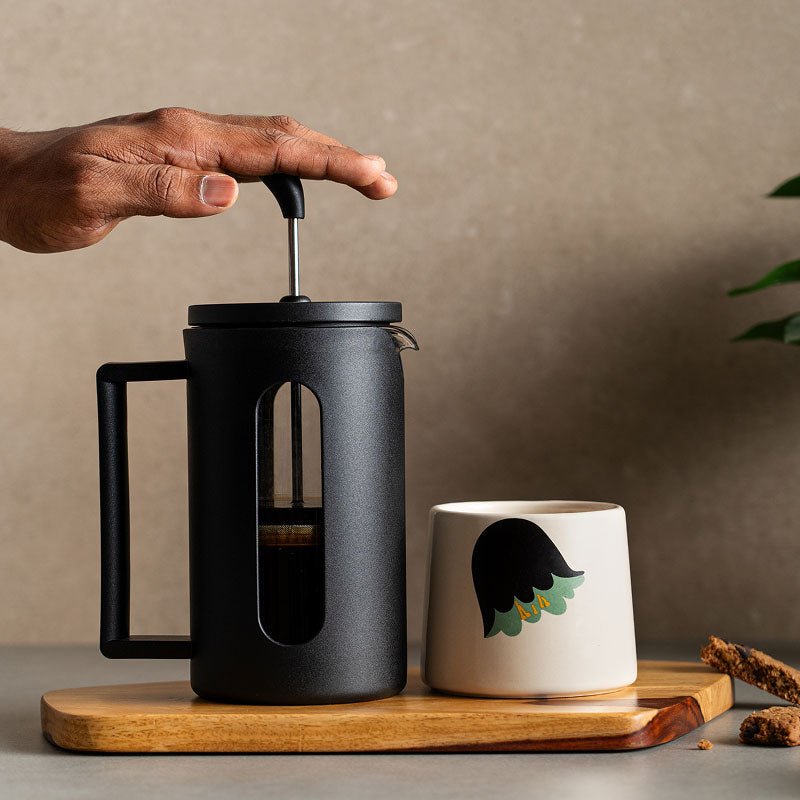
Budan French Press, 600 ml
A borosilicate glass French press with a stainless steel frame and mesh filter. The 600 ml capacity yields two to three mugs of coffee per brew. Budan French press coffee is full bodied, slightly thicker than drip, and best suited to medium to dark roast beans.
Budan Electric Kettle and Gooseneck Kettles
Budan's kettle range supports manual brewing styles like pour over, V60, and Chemex. The gooseneck variant in particular gives the slow, controlled pour that pour over coffee needs. Standard electric kettles in the range also handle general hot water duties for French press, tea, and instant coffee.
Budan Drip Coffee Maker
Budan Drip Coffee Maker, 12 Cup
The most affordable electric brewer in the Budan lineup at around Rs. 1,499. Classic drip coffee maker format with a 12 cup carafe, paper filter basket, and a hot plate to keep coffee warm after brewing.
This is a volume brewer, not a flavour specialist. Best for households where multiple people drink coffee through the morning, or for small offices where a big pot of coffee needs to be ready on demand. If you want espresso style strength or cafe quality, step up to the espresso range below.
Budan Semi Automatic Espresso Machines
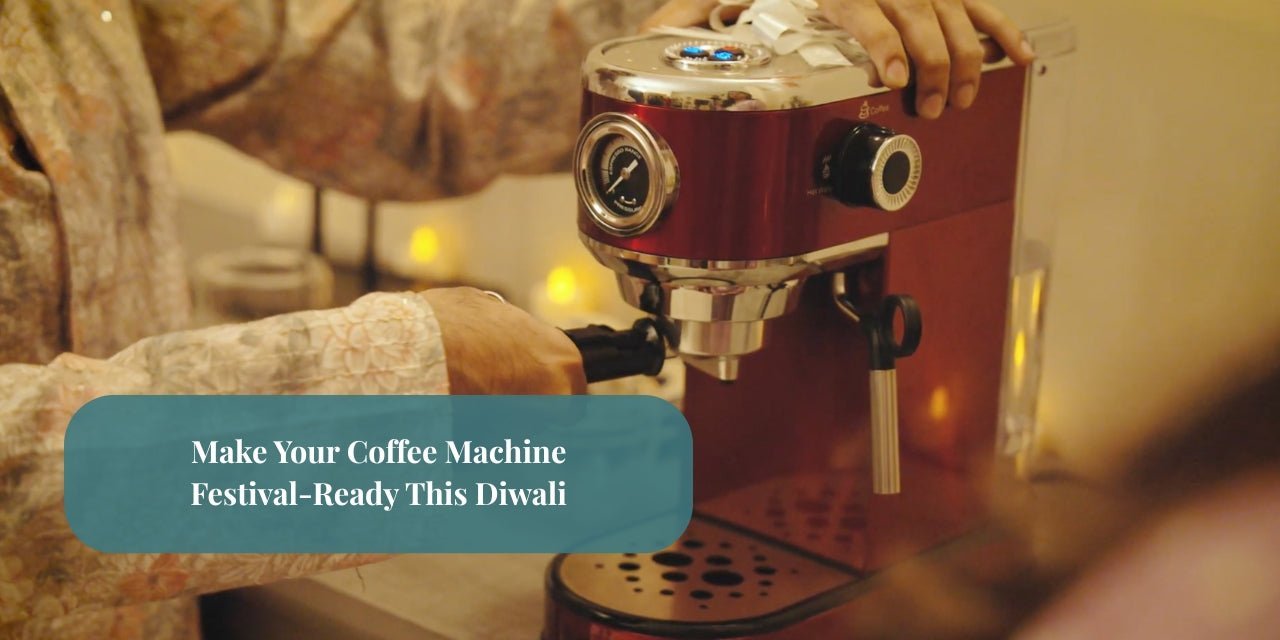
This is where Budan starts competing directly with imported brands like DeLonghi. Semi automatic means you control the shot manually, pulling each espresso yourself. Milk frothing is done through a steam wand on the side of the machine.
Budan Classic
The entry level semi automatic espresso machine at around Rs. 8,400. Compact footprint, 15 bar pump, single boiler thermoblock, and a steam wand for milk frothing.
The Budan Classic is positioned for first time espresso buyers who want to move beyond moka pot coffee but do not want to commit Rs. 20,000 or more to a mid range machine. The trade off is a smaller water tank, a less substantial build, and a shorter feature list than the higher Budan Espresso Machine.
Best for: singles and couples who pull two to four shots a day and want real espresso without spending big.
Budan Espresso Machine
The mid range flagship of the semi automatic lineup at around Rs. 23,000. This is the machine most serious home baristas in the Budan range gravitate toward.
Key specs:
• 15 bar Italian pump
• Thermoblock heating
• 58 mm commercial size portafilter
• Stainless steel body
• 1.8 L water tank
• Traditional steam wand
• 1 year home use warranty
The 58 mm portafilter is the single most important upgrade over the Budan Classic and over imported competitors like the DeLonghi Dedica, which uses a proprietary 51 mm format. With 58 mm, every third party tamper, dosing funnel, puck screen, and bottomless portafilter on the market fits your machine. This matters enormously for anyone planning to grow into the craft over the next few years.
Best for: home baristas who want to learn latte art, pull cafe quality shots, and eventually upgrade their setup with third party accessories.
Budan Fully Automatic Machines
Fully automatic or bean to cup machines grind, dose, tamp, and extract espresso at the press of a button. They are the most convenient category in coffee, and also the most expensive for home users.
Budan Fully Automatic Espresso Machine
Budan's core fully automatic model sits around Rs. 40,000 to 60,000 depending on configuration and current offers. Built in conical burr grinder, multiple grind settings, dual thermoblock design, customisable beverage profiles, touchscreen interface, and auto clean cycles.
On paper, the specs match DeLonghi Magnifica models priced at Rs. 80,000 and above, which is where Budan's value proposition gets hard to argue with. The honest trade off is brand maturity. DeLonghi has refined the Magnifica platform for over 20 years. Budan's fully automatic range is newer, and long term reliability data is still being built.
Best for: home users who brew four or more cups a day, want one touch convenience, and are comfortable trading a longer brand track record for a significantly lower price.
Budan One Touch Coffee Machine
A unique model in the Budan range because it supports both Nespresso compatible capsules and ground coffee. Most espresso machines commit to one format. The One Touch gives you flexibility.
This matters if you want the convenience of pods on busy mornings and the flexibility to dial in ground coffee on weekends, or if different members of your household prefer different brewing styles. It is one of the only machines in its price category in India with this dual capability.
Best for: households with mixed coffee preferences, or for buyers who want an easy way to explore espresso without committing to grinding their own beans every day.
Budan Commercial M Series
This is where Budan becomes genuinely competitive with European commercial brands. The M series is built for cafes, QSR outlets, offices, corporate pantries, and hospitality setups where machines pull 100 or more shots a day.
Budan Pro
The entry point into Budan commercial. Positioned for boutique cafes, coffee kiosks, and high footfall offices. Commercial grade components, higher duty cycle than home machines, and support contract options through authorised dealers.
Budan M50
The smallest in the M series, suited to small cafes, food trucks, and office pantries serving 50 to 100 cups a day. Single group, high efficiency boiler, and a compact footprint for counter space limited setups.
Budan M80
A step up from the M50 with higher throughput, faster recovery between shots, and a larger water reservoir. Best for cafes in the 100 to 200 cups a day range.
Budan M100
Mid range commercial machine built for busier cafes and QSR outlets. Dual group head, larger boiler, customisable beverage programming, and commercial service contract eligibility.
Budan M200
A higher volume commercial machine with throughput and consistency tuning for cafes pulling 200 to 400 cups a day. Dual boiler architecture on most configurations, advanced milk system, and durable group heads.
Budan M300
The top of the M series, engineered for high volume hospitality and QSR environments. Designed for consistency under heavy continuous use, multi group configuration, and the longest duty cycle in the lineup.
The M series is competitive with DeLonghi's commercial lineup on specs and is 30 to 50 percent cheaper on most configurations. For cafes and commercial buyers evaluating Budan versus imported brands, the decision usually comes down to the weight you place on brand track record versus upfront capex.
How to Choose the Right Budan Coffee Machine
Use this quick decision framework to narrow the range.
Choose a Budan manual brewer if: you are new to coffee, brewing for yourself or a couple, and want cafe quality without committing to an electric machine. Start with the 6 cup Stainless Steel Moka Pot if your household has two to four people, or the 2 cup if you brew solo.
Choose the Budan Drip Coffee Maker if: your household or office brews multiple cups at once and cares more about volume than espresso strength.
Choose the Budan Classic if: you want to move into real espresso but want to keep your budget under Rs. 10,000.
Choose the Budan Espresso Machine if: you are serious about home espresso, want to learn latte art, and care about upgrading with third party accessories. This is the best overall value in the lineup for most home baristas.
Choose the Budan Fully Automatic or One Touch if: you want one button convenience, brew four or more cups a day, and are comfortable with a Rs. 40,000 plus investment.
Choose a Budan M series machine if: you are opening a cafe, fitting out an office pantry, or running a QSR outlet. Match the specific M model to your daily cup count.
Budan Warranty and Service
Every Budan home use coffee machine ships with a 1 year manufacturer warranty, which is the standard across the Indian coffee machine category. Commercial M series machines have extended warranty and service contract options available through authorised dealers.
Service is handled through Coffee Codes India Pvt Ltd and a growing network of authorised partners including Something's Brewing and Kaapi Machines. Response times are fastest in Bengaluru, Chennai, Hyderabad, and other South Indian coffee cities where the dealer network is most mature. Commercial customers generally get faster service than home users because of contract priority.
For common wear parts like portafilter gaskets, shower screens, and filter baskets, the 58 mm cafe standard on the and M series means generic third party parts fit. For brand specific internal components like pumps, thermoblocks, and control boards, parts come through authorised dealers and lead times can run 2 to 4 weeks, so plan accordingly if you run a cafe where downtime matters.