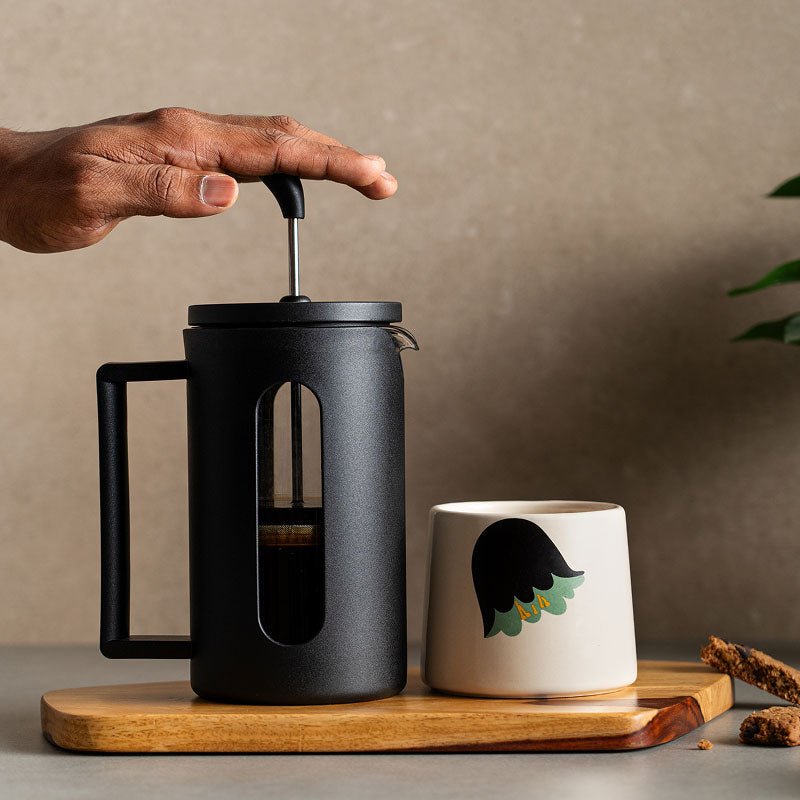
The French press is one of the simplest coffee makers to use, brewing robust, full bodied coffee with less bitterness than many other methods, but small missteps in grind size, ratio, or timing quietly hold most people back from their best possible cup. Below are eleven practical adjustments that make the real difference, along with the reasoning behind each one so you understand why it matters rather than just following steps blindly.
Quick Reference
|
Variable |
Target |
|
Coffee to water ratio |
1:15 (1g coffee per 15g water) |
|
Water temperature |
90°C to 96°C |
|
Steep time |
4 minutes |
|
Grind size |
Coarse |
Choose High Quality Beans
The foundation of any good cup is the bean itself. Freshly roasted, high quality beans make a noticeable difference, and beans roasted specifically with French press extraction in mind tend to perform best in this method. Because French press is a full immersion technique with no paper filter to catch natural oils, the beans you choose come through more directly in the cup than they would with a paper filtered method, so bean quality matters even more here than in some other brewing styles. Medium to dark roasts tend to shine in a French press since their fuller body and lower acidity complement the heavier mouthfeel this method naturally produces, though there is nothing wrong with experimenting with lighter roasts if you prefer a brighter cup.
Use Coarsely Ground Coffee
Coarse grind is the correct setting for French press, fine grounds slip through the filter and make the brew muddy and over extracted. A burr grinder gives far more consistent coarseness than a blade grinder, which tends to produce a mix of fine and coarse particles even on its coarsest setting, since it chops rather than crushes the beans. Grinding just before brewing preserves freshness that pre ground coffee loses within hours, as the aromatic oils in coffee begin breaking down almost immediately once the bean's surface area is exposed by grinding.
Perfect the Coffee to Water Ratio
A widely used ratio for French press is 1:15, one gram of coffee for every 15 grams of water. You can adjust to taste, going closer to 1:12 for a stronger cup or 1:17 for something lighter, but drifting too far from this baseline is where most inconsistent brews start. This ratio also scales directly for larger batches, so if you are brewing for a household rather than a single cup, doubling or tripling both the coffee and water keeps the same strength intact.
Use the Right Water Temperature
Boiling water scorches the grounds and pushes the brew toward bitterness, while water that is too cool underextracts and leaves the cup flat and sour. The ideal range sits between 90°C and 96°C, which in practice means letting boiling water rest for roughly 30 seconds before pouring if you don't have a temperature controlled kettle on hand.
Preheat Your French Press
Rinsing the carafe with hot water before adding coffee and brewing water keeps the brewing temperature stable throughout the steep, preventing the kind of heat loss that leads to inconsistent extraction. This step takes seconds but matters more in colder climates or with glass carafes that lose heat faster than insulated ones.
Bloom the Coffee Grounds
Pour a small amount of hot water over the grounds first and let it sit for 30 seconds. This releases trapped carbon dioxide and allows for more even saturation once the rest of the water goes in, which shows up as noticeably clearer flavour in the final cup. Freshly roasted beans tend to bloom more visibly than older beans, since more of the trapped gas remains intact closer to the roast date.
Stir and Steep Properly
After adding the rest of the water, give the mixture a gentle stir to ensure every ground is evenly saturated, then let it steep for four minutes using a timer rather than guessing. Steeping shorter tends to underextract and steeping longer tends to push the cup toward bitterness, so timing consistency across brews is one of the simplest ways to get repeatable results.
Skim Before Plunging
Skimming off the foam and floating grounds with a spoon before pressing reduces sediment and results in a noticeably cleaner, smoother cup. This step is easy to skip but makes a real difference in mouthfeel, particularly if you tend to find French press coffee too heavy or gritty.
Press With Care
Press the plunger down slowly and evenly rather than forcing it, since agitating the grounds during the press throws off an otherwise balanced extraction. A slow, steady press also reduces the amount of fine sediment that ends up passing through the mesh filter into your cup.
Pour Immediately
Once brewed, pour the coffee out rather than leaving it sitting in the press. Coffee left in contact with the grounds keeps extracting the whole time it sits there, and even a few extra minutes can push a well balanced brew into bitter territory.
Clean Your French Press Thoroughly
Residual coffee oils build up in the mesh and carafe over time and affect the flavour of future brews, often showing up as a stale or rancid note that is easy to mistake for a bean quality issue. Disassemble and clean with warm, soapy water after every use to keep the press performing consistently, and check the mesh filter periodically for buildup that a quick rinse alone won't remove.
Final Thoughts on French Press Consistency
Small adjustments compound. Getting the ratio, grind, temperature, and timing right individually is straightforward, the real gain comes from applying all of them consistently rather than getting one or two right and letting the rest slide. If you want to try a different French press than the one you already own, the French press collection covers a range of sizes and price points, and the coffee accessories collection has scales, timers, and burr grinders worth pairing with any of the tips above.