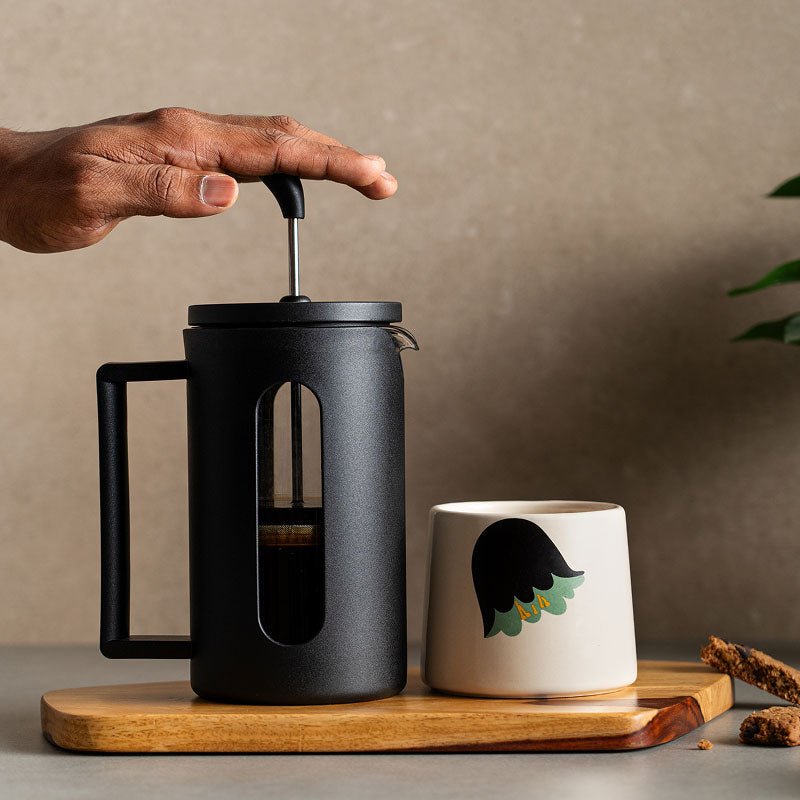
If you're still on the fence about owning a French press, here's the pitch: it's not just a coffee maker. The same plunger and mesh filter that makes a great cup of coffee turns out to be surprisingly good at several other kitchen jobs too, most of which have nothing to do with coffee at all. If you already own one, there's a good chance it's been sitting in a cupboard doing far less than it's capable of.
Seven Uses at a Glance
|
Use |
What You Need |
|
Frothing milk |
Cold milk |
|
Hop infused beer |
Beer, hops |
|
Rinsing grains |
Rice, quinoa, water |
|
Infused water |
Fruit or herbs, cold water |
|
Juicing soft fruit |
Berries, watermelon, citrus |
|
Brewing loose leaf tea |
Tea leaves, hot water |
|
Homemade almond milk |
Soaked almonds, water |
Froth Your Milk
Get barista style frothy foam by pouring cold milk into the press and plunging repeatedly, the pumping action works air into the milk the same way it works flavour out of coffee grounds. Give it a short stir in the microwave to stabilise the foam before spooning it onto your coffee. It won't produce quite the same fine microfoam as a dedicated tool like the Budan Milk Frother, but for an occasional cappuccino at home without buying another gadget, it does the job well.
Add Hops to Beer
If you're into hoppy beer, add hops to the press and pour beer over them, let it cool in the fridge, then push the plunger down to hold the hops in place while you pour. It's a simple way to get a brewery style hop infusion at home, and the mesh filter does exactly the job it was designed for, just with a different liquid running through it. This one surprises most people the first time they hear it, but it works because the French press mechanism was never really coffee specific to begin with, it's just a plunger and filter that happens to be excellent at separating solids from liquid.
Rinse Grains
Pour rice or quinoa into the carafe, cover with water, and press the plunger down to separate the water from the grains. Rinsed and ready to cook in one motion, no colander needed, and no risk of grains escaping down the drain the way they sometimes do with a mesh strainer that's slightly too coarse.
Make Infused Water
For a refreshing spa style drink, add fruit or herbs, mint and cucumber is a solid combination, and cover with cold water. Leave it in the fridge overnight, press in the morning, and it's ready. The plunger keeps the fruit and herbs contained at the bottom once you're done infusing, so you get clean, particle free water without needing to strain it separately before drinking.
Juice Soft Berries and Fruit
Put berries, watermelon, or citrus fruit into the press and plunge to extract fresh juice, one of the more surprising uses on this list. Stick to soft fruits though, harder fruits like apples won't break down the same way under the plunger's pressure, and you'll end up with more pulp than juice for your effort. Berries in particular work well since they burst easily and the mesh naturally catches the seeds and skin.
Brew Loose Leaf Tea
Put loose leaf tea at the bottom of the carafe and pour hot water over it, let it steep, then strain. Pushing the plunger down slowly helps extract more flavour from the leaves without over agitating them, which can otherwise pull through some bitterness the same way over extracting coffee grounds does.
Make Homemade Almond Milk
Blend pre soaked almonds with three cups of water or coconut water, then pour the mixture into the press. Slowly pressing the plunger separates the almond pulp from the milk, giving you a fresh batch with no cheesecloth straining required. It's a genuinely useful trick for anyone who already has almonds soaking for another recipe and doesn't want to buy a separate nut milk bag just for this.
Keeping It Clean Between Uses
Since you're now using one press for coffee, beer, fruit, and grains, cleaning between uses matters more than usual. A quick rinse isn't always enough once oils or fruit residue are involved, and the coffee machine cleaning range has options suited to keeping glass and mesh filters properly free of buildup, worth a look if your press is pulling double or triple duty regularly.
One Rule Worth Following
Don't pour something hot into your French press immediately followed by something cold, or the reverse, let the glass come back to room temperature between uses to avoid thermal shock. If your current press is showing wear from years of multi use duty, the French press collection has replacement options worth browsing.