What is Vienna Roast? - A Beginner's Guide to Understanding Coffee Roast Profiles
Vienna roast is a dark roast, sitting just past medium-dark and just short of French roast. Vienna roast coffee comes out a deep chestnut brown with a light, patchy sheen of oil on the surface, and the cup is heavy, smooth and low in acidity, with caramelised sugar and dark chocolate where a lighter roast would give you fruit.
If you have ever picked up a bag labelled Vienna and wondered how it differs from Full City or French, the answer is a matter of about thirty seconds in the roaster. Those thirty seconds change almost everything about the cup.
Where Vienna roast sits on the roast spectrum
Roast names are not standardised, but the broad order is consistent.
|
Roast level |
Common names |
What the cup tastes like |
Surface oil |
|
Light |
Cinnamon, Light City |
Bright, acidic, tea-like, origin-forward |
None |
|
Medium |
City, American |
Balanced, sweeter, acidity still present |
None |
|
Medium-dark |
Full City, Full City+ |
More body, less acidity, caramel appears |
Little to none |
|
Dark |
Vienna, French, Italian |
Roast-forward, chocolate through to smoke |
Light to heavy |
Vienna opens the dark category. It is the first roast level where most people would describe the coffee as roasty rather than fruity, and the last one where the bean's origin still shows through at all.
What happens to the bean at Vienna roast
Two audible events mark a roast. First crack, at roughly 196 degrees Celsius of bean temperature, is when moisture escapes and the bean expands with a sound like popcorn. Second crack, at roughly 224 to 230 degrees, is the cell walls fracturing as oils migrate to the surface.
Vienna roast is dropped right at or just into second crack. That is why you see light oil on the beans but not the even, wet sheen of a French roast. The sugars inside have caramelised thoroughly, which is where the sweetness comes from, but they have not yet begun to carbonise into the smoky, ashy flavours of the darkest roasts.
The practical consequence is that Vienna roast is a narrow window. A roaster who holds for another twenty seconds has a French roast. This is why Vienna roast coffee from a careful roaster tastes noticeably better than a generic dark roast from a large one.
What Vienna roast tastes like
Expect dark chocolate, toasted nuts, caramelised sugar and a syrupy, velvety body. The overall impression is toasty and smooth rather than sharp. Acidity is low but not absent, so there is still a faint brightness underneath rather than the flat heaviness of a very dark roast.
What you lose is origin nuance. The floral, citric and berry notes that a light roast draws out of a washed Ethiopian or a honey-processed Indian coffee are mostly gone by this point. That is a trade, not a fault. You gain sweetness, body and a cup that holds its character through milk.
The difference between Vienna roast, Full City and French roast
|
Full City |
Vienna |
French |
|
|
Surface oil |
Little to none |
Light and patchy |
Even sheen |
|
Acidity |
Noticeable |
Low but present |
Almost none |
|
Dominant flavour |
Caramel, origin still clear |
Dark chocolate, caramelised sugar |
Smoke, bittersweet |
|
Origin character |
Clearly present |
Faint |
Gone |
|
Best suited to |
Filter and espresso |
Milk drinks and espresso |
Strong black coffee |
The difference between any two of these is under a minute of roasting. If a bag just says "dark roast" with no level named, you have no way of knowing which of the three you are getting.
Why choose Vienna roast
It is forgiving. Dark roasts extract faster and more evenly than light ones, which means small errors in grind or water temperature matter less. For anyone still learning to brew, that is a real advantage.
It works with milk. The caramelised sugar and chocolate notes carry through milk where a light roast's delicate acidity disappears entirely. If most of what you drink is a latte or a cappuccino, a Vienna roast will taste like something rather than nothing.
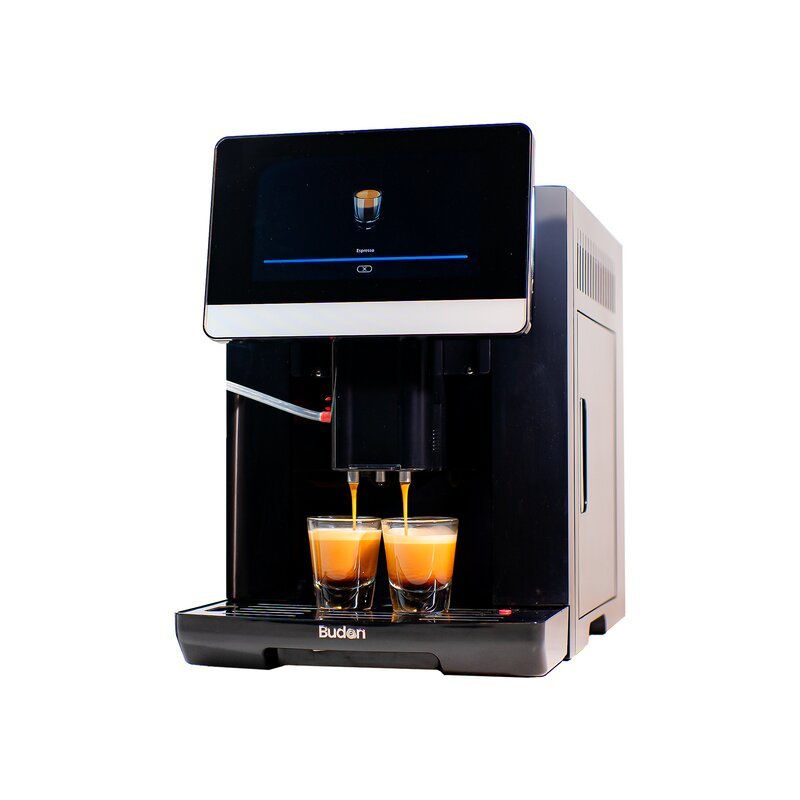
It suits espresso. The low acidity and robust body give you a thick, sweet shot with a good crema, which is why dark roasts have been the traditional base for espresso blends for decades. Any espresso machine with a working steam wand will get the most out of this roast.
It is consistent. Because roast character dominates origin character, Vienna roast coffee tastes much the same from bag to bag and season to season. Light roasts vary considerably with harvest.
How to brew Vienna roast
Use slightly cooler water than you would for a lighter roast. Dark roasts are more soluble and extract faster, so 88 to 93 degrees Celsius (190 to 199°F) is a better target than the 93 to 96 (199 to 205°F) you would use for a light roast. Water straight off the boil will pull out bitterness that is not the coffee's fault.
For espresso, grind fine and aim for roughly double your dose in weight out, over 25 to 30 seconds. Dark roasts run faster than light ones at the same setting, so expect to grind finer than you would otherwise.
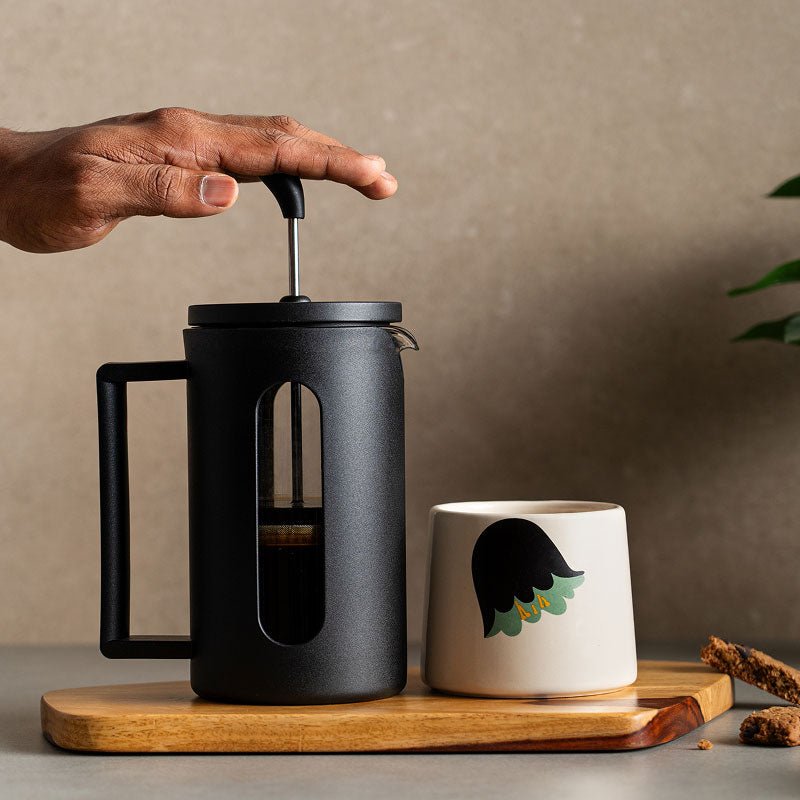
For a French press, grind coarse and steep four minutes at a 1:15 ratio, then decant immediately. The oils in a dark roast make for a particularly rich immersion brew.
For pour over, grind medium and work to 1:16 over about three minutes. A Vienna roast in a pour over gives you a cleaner, less syrupy version of the same flavours. A moka pot suits it too, and is arguably the most traditional pairing for a dark roast.
Whichever method you use, grind fresh. A burr grinder matters more at this roast level than people expect, because dark roasts are brittle and a blade grinder reduces them to dust and chunks even faster than it does lighter beans.
Which coffees take a Vienna roast well
Dense, high-grown Arabica handles the heat without turning flat. Indian estate coffees from Coorg and Chikmagalur, Brazilian naturals and Sumatran coffees are all traditional choices, because they have the body and low acidity to begin with. Maverick & Farmer roast from their own Coorg estate, which is the sort of dense, high-grown coffee that takes a darker roast without losing its sweetness.
Delicate, high-acidity coffees are usually wasted at this level. A floral Ethiopian taken to Vienna roast loses the exact qualities you paid for. If a roaster is taking a single origin dark, it is generally because that coffee has the structure for it.
Robusta appears in some dark roast espresso blends for body and crema, and a well-processed Robusta at a dark roast is a deliberate choice rather than a cost saving.
Buying and storing Vienna roast coffee
Buy by roast date and check the roast level is named rather than just "dark". A bag that says Vienna, Full City or French tells you something. One that says only "dark roast" does not. Our coffee beans range lists the roast level on every bag.
Dark roasts go stale faster than light ones. The oils that have migrated to the surface are exposed to air, and they oxidise. Where a light roast holds up for six weeks, a Vienna roast is best inside three to four. Buy smaller bags more often.
Let it rest two to three days after roasting before pulling espresso, since the beans release carbon dioxide and a very fresh dark roast is hard to dial in. Store it sealed, cool and dark, in the bag it came in rather than a clear jar on the counter.