Coffee Machines for Home: A Beginner's Guide to Brewing Like a Pro
A coffee machine for home lets you brew café-style coffee in your own kitchen, with fresh beans and your own recipe. The jump from instant coffee comes down to three things: choosing the right espresso machine for home, learning a few simple coffee machine steps, and keeping it clean. This coffee machine guide covers all three, including coffee maker tips for beginners, the best beginner coffee machine options at Something's Brewing, and how to brew coffee at home like a barista.
Coffee Maker or Coffee Machine: What's the Difference?
People use both terms for the same idea, but they can mean different things. A coffee maker usually means a drip or filter brewer that makes a larger pot of milder coffee. A coffee machine usually means an espresso machine that forces hot water through fine grounds to make a small, concentrated shot. This guide focuses on espresso-style machines, because they are what you need for lattes, cappuccinos and café-style drinks. Most of the tips in it, like using fresh beans, clean water and a clean machine, apply to any kind of coffee maker.
Why Buy a Coffee Machine for Home?
Café visits add up, and a home machine pays for itself over time. It also lets you control the beans, strength and milk, which a takeaway cup never does.
- Brew anytime: a fresh cup is ready in minutes, morning or night.
- Try café drinks: lattes, cappuccinos, Americanos and mochas are all possible at home.
- Customise every cup: change the dose, grind and strength until it suits your taste.
- Impress guests: a proper espresso or latte is a good way to host.
Coffee Machine Basics: How a Home Machine Works
An espresso machine pushes hot water through finely ground coffee under pressure. On home machines that pressure is usually 15 bar, and it is what gives you a concentrated shot with a layer of crema on top.
- Water tank: holds the water and is usually removable for easy refilling.
- Pump and heater: the pump builds pressure, and a thermoblock heats the water quickly.
- Portafilter and group head: the portafilter holds the ground coffee and locks into the group head, where water meets the coffee.
- Steam wand: heats and froths milk for lattes and cappuccinos.
- Drip tray: catches spills and drips, and needs emptying often.
Types of Home Coffee Machines
Most home machines fall into three groups, and each suits a different amount of effort. For a wider comparison that includes drip, French press and moka pot, see this types of coffee machines guide.
Pod and Capsule Machines
You insert a capsule and press a button, so there is no grinding, tamping or guesswork. These suit anyone who wants a quick, consistent cup from a basic coffee machine with almost no learning curve.
Semi-Automatic Espresso Machines
You grind, dose and tamp the coffee yourself, and the machine supplies the pressure and heat. This gives you the most control and the best chance of café-quality espresso. Browse the semi-automatic espresso machines if you enjoy the process.
Automatic Coffee Machines
These handle more of the process for you, so results are more repeatable with less effort. They suit busy households that want consistency. You can compare them under automatic coffee machines.
Not sure between the first two? This pod vs semi-automatic comparison breaks down the trade-offs.
How to Choose a Coffee Machine for Beginners
The best beginner coffee machine is the one you will actually use every day. Start with these questions.
How Easy Is It to Use?
Ease of use matters more than features at the start. Look for clear controls, a removable water tank and parts that come apart for cleaning. If you want one-button coffee, choose a pod machine. If you enjoy learning the craft, a semi-automatic machine rewards you with better espresso.
Do You Drink Milk-Based Coffee?
For lattes and cappuccinos, look for a steam wand or an integrated milk container. Check that the steam is strong enough to texture milk properly.
What Pressure Does It Offer?
An espresso machine for beginners should offer 15 bar of pump pressure, the standard for rich espresso with crema.
How Much Space and Maintenance Can You Manage?
Check the water tank size, the footprint on your counter, and how easily the drip tray and portafilter come apart for cleaning.
You can see the full range under home coffee machines.
Beginner-Friendly Budan Coffee Machines
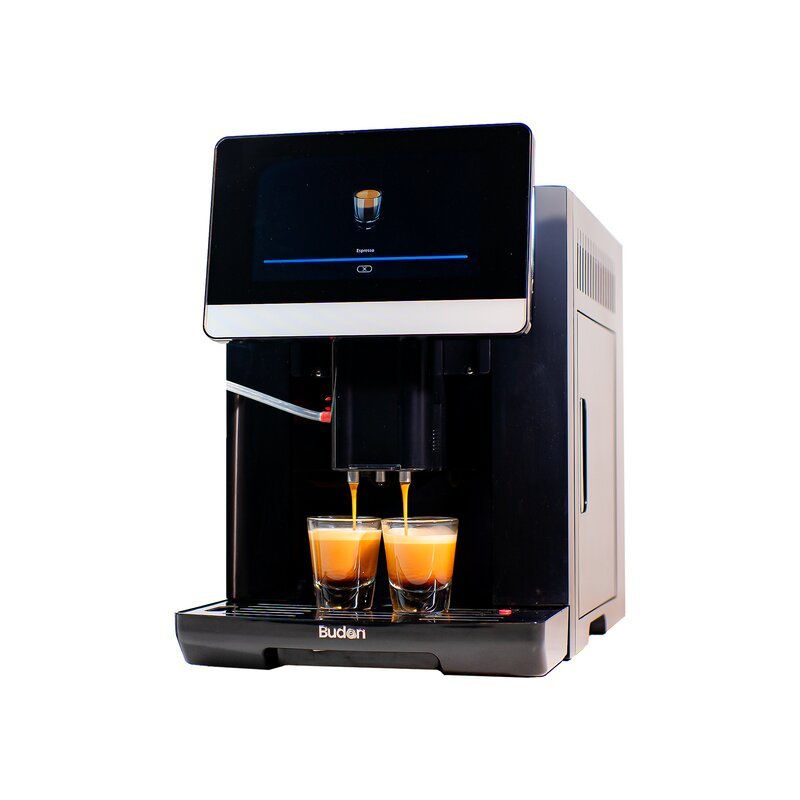
Budan machines are built for home use, with 15-bar pressure and simple controls. Here is how three in-stock options compare.
|
Budan Classic |
Budan Sofia |
Budan One Touch |
|
|
Best for |
Hands-on beginners |
Learners who want more control |
Quick, no-fuss coffee |
|
Pressure |
15 bar |
15 bar |
15 bar |
|
Water tank |
1.8 L |
1.7 L |
1.2 L |
|
Coffee format |
Ground coffee |
Ground coffee |
Nespresso-compatible capsules or ground coffee |
|
Heating |
Thermoblock |
1700W thermoblock |
Thermoblock |
|
Milk |
Adjustable steam wand |
Steam wand for milk texturing |
Integrated milk container |
|
Warranty |
1 year |
1 year |
1 year |
Budan Classic Semi-Automatic Coffee Machine
The Budan Classic is a good first step into manual espresso. It has a brushed stainless steel body, a pressure gauge, a portafilter with 1-cup and 2-cup baskets, an adjustable steam wand and a hot water function for Americanos or tea. The kit includes a tamper, measuring spoon and cleaning kit.
Budan Sofia Espresso Machine
The Budan Sofia suits beginners who want to grow into the hobby. It has a standard 58mm portafilter, PID temperature control, a thermal balance group head and adjustable pre-infusion for smoother extraction. A dual electronic display makes it easy to read.
Budan One Touch Coffee Machine
The Budan One Touch is the easiest of the three. It takes Nespresso-compatible capsules and ground coffee through two included adaptors, and brews with a single button and LED alerts. The integrated milk and water containers keep the counter tidy.
Coffee Machine Set Up at Home
A good start prevents most beginner problems.
- Choose a level spot near a power socket, with room to lift the water tank out.
- Rinse the tank and any removable parts before first use.
- Fill the tank with fresh, filtered water up to the marked line.
- Run a blank cycle with no coffee, so the machine flushes and heats the system.
- Warm your cup on the cup tray if your machine has one, or with hot water.
Step-by-Step: How to Brew Like a Barista
These coffee machine steps apply to any espresso machine.
Step 1: Choose the Right Coffee Beans
Use freshly roasted whole beans and grind just before brewing. Espresso needs a fine grind. Pre-ground coffee works if you are short on time, but fresh grinding gives a noticeably better cup. A good electric coffee grinder makes this easy.
The best coffee to make at home with an espresso machine is usually a medium or medium-dark roast, which gives a balanced, chocolatey shot. Explore the coffee beans range and pick a roast that suits your taste.
Step 2: Pull the Perfect Espresso Shot
- Add about 18 to 20 g of coffee for a double shot.
- Tamp firmly and evenly.
- Lock in the portafilter and press the button.
- Aim for a shot that takes about 25 to 30 seconds and shows a golden crema.
As a rough guide, a double shot yields about twice the weight of your dose in the cup.
Step 3: Master the Art of Frothing Milk
- Start with cold milk. Full-fat milk gives the best foam.
- Purge the steam wand before you begin.
- Submerge the tip just below the surface and move the pitcher in small circles for velvety microfoam.
- Purge and wipe the wand after each use.
Step 4: Try These Café-Style Coffee Recipes
- Americano: espresso diluted with hot water.
- Latte: espresso with steamed milk and a thin layer of foam. Our guide to making a latte at home walks through it.
- Cappuccino: equal parts espresso, steamed milk and milk foam.
- Mocha: add cocoa powder or chocolate syrup to the cup before the shot, then top with steamed milk.
Coffee Maker Tips for Beginners
These tips make the biggest difference to your first few weeks of brewing coffee at home.
Before You Brew
- Use fresh beans: coffee tastes best within a few weeks of roasting. Store it in an airtight container away from light and heat.
- Weigh your coffee: a consistent dose gives consistent shots.
- Preheat the cup and the portafilter: a cold cup cools your coffee quickly.
While You Brew
- Tamp evenly: a level, firm tamp helps water flow through the coffee uniformly.
- Change one thing at a time: if a shot tastes off, adjust the grind or the dose, not both together.
- Watch the clock: timing every shot shows you quickly whether your grind is right.
Common Beginner Mistakes
- Using stale or pre-ground coffee that has been open for weeks.
- Overfilling the basket, which blocks proper water flow.
- Skipping the blank cycle and brewing straight from a cold machine.
- Leaving milk residue on the steam wand.
- Using hard tap water, which builds up limescale over time.
Your First Week With a New Machine
- Day 1: set up the machine, run a blank cycle and make a plain Americano to get used to the controls.
- Days 2 and 3: use 18 g of coffee and aim for about 36 g of espresso in 25 to 30 seconds. Move the grind finer if the shot runs fast and coarser if it drips slowly.
- Days 4 and 5: practise steaming milk with a small amount of milk, and make your first latte.
- Days 6 and 7: write down the grind setting and dose that tasted best, then repeat it daily.
How to Keep Your Coffee Machine in Top Shape
Regular care protects both the taste of your coffee and the life of your machine.
Daily
Clean the portafilter and drip tray. Wipe the drip tray, remove used grounds, and wipe the steam wand straight after each use.
Weekly
Deep clean the portafilter with a mild detergent every few days, and soak the steam wand tip in warm, soapy water once a week.
Monthly
Descale monthly. Hard water leaves mineral buildup that affects flow and taste and can lead to costly repairs. Using filtered water slows this down and improves flavour.
Which Home Coffee Machine Should You Start With?
If you want coffee in under a minute with no learning, start with the Budan One Touch. If you want to learn espresso properly on a simple machine, start with the Budan Classic. If you already know you will take the hobby further, the Budan Sofia gives you PID control and pre-infusion to grow into. Whichever you pick, fresh beans, clean water and a clean machine matter more than any single feature.